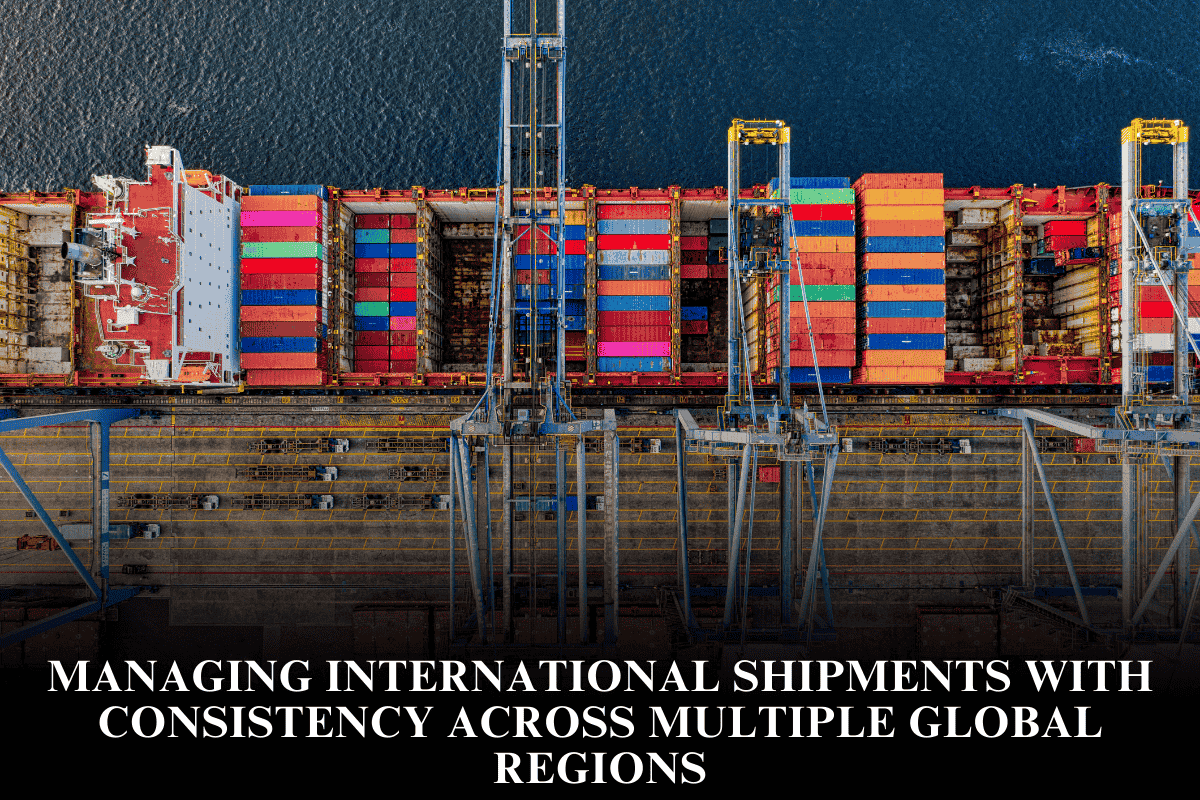
Managing international shipments with consistency across multiple global regions demands strategic planning, technology integration, and compliance mastery to ensure seamless operations for U.S.-based businesses expanding worldwide.
From navigating customs in Europe to optimizing routes in Asia-Pacific, standardized processes cut delays by 30-50% and costs by 15-25% while boosting customer satisfaction. Reliable execution across time zones builds trust and scalability in today’s e-commerce-driven supply chains.
Standardize Shipping Protocols
Create uniform SOPs for documentation, packaging, and labeling tailored to regions—e.g., EU’s REACH chemicals rules versus China’s CIQ inspections.
Use multi-carrier shipping software (MCSS) like ProShip to automate commercial invoices, HS codes, and certificates across DHL, FedEx, and UPS, reducing errors by 40%. Consolidate smaller shipments into full container loads (FCL) for ocean freight, balancing cost and speed for high-volume U.S. exporters to Latin America or Southeast Asia.
Leverage Technology for Visibility
Real-time tracking via IoT-enabled platforms like Freightos or ShipHero provides end-to-end visibility, from U.S. warehouses to final delivery in Australia. AI-driven analytics forecast delays from port congestion (e.g., LA/Long Beach backups) or weather in monsoon-prone India, enabling proactive rerouting. Regional dashboards unify data across Americas, EMEA, and APAC, with APIs integrating ERP systems like NetSuite for inventory sync.
Partner with Global Networks
Select freight forwarders like Noatum or Tigerhawk with dense networks—robust in 200+ countries—for multimodal transport (air-ocean-ground hybrids).
Regional hubs in Rotterdam (Europe), Singapore (Asia), and Miami (Latin America) cut lead times 20-30% via localized warehousing. Vet partners on compliance history, insurance coverage, and digital tools; U.S. firms benefit from C-TPAT certified carriers to streamline CBP clearance.
Master Customs and Risk Management
Pre-clear shipments with advance manifests (AMS/ACI for ocean/air) and bonds for U.S. exports; tools like Descartes automate tariff classifications. Secure comprehensive insurance covering theft in high-risk routes like Middle East waters; conduct route risk assessments quarterly. Sustainable packaging—recycled materials meeting EU’s PPWR—enhances compliance and appeal in eco-conscious markets like Germany.
Optimize Costs and Performance
Demand forecasting via analytics prevents overstock in volatile regions; fulfillment centers near customers (e.g., WareIQ in India) slash duties and shipping. Benchmark KPIs—OTD rates >95%, cost per kg under $2-5 regionally—and review quarterly for continuous improvement. Bulk negotiate carrier rates; leverage FTAs like USMCA for duty-free North America flows.
Training and Scalability
Cross-train teams on regional nuances via platforms like MPI’s resources; scale with cloud-based TMS for peak seasons. U.S. exporters to multiple zones see 25% efficiency gains from these practices, per industry benchmarks.
FAQs
1. How to ensure customs consistency globally?
Automate HS codes and manifests with MCSS; partner with compliant forwarders.
2. Best tech for multi-region tracking?
Real-time platforms like ShipHero or Freightos for unified visibility.
3. Cost-saving tips for high-volume?
Consolidate FCL, use FTAs, regional warehouses.
4. Handling regional risks?
Quarterly assessments, full insurance, multimodal backups.
5. Measure shipment success?
Track OTD >95%, cost/kg, via KPI dashboards.