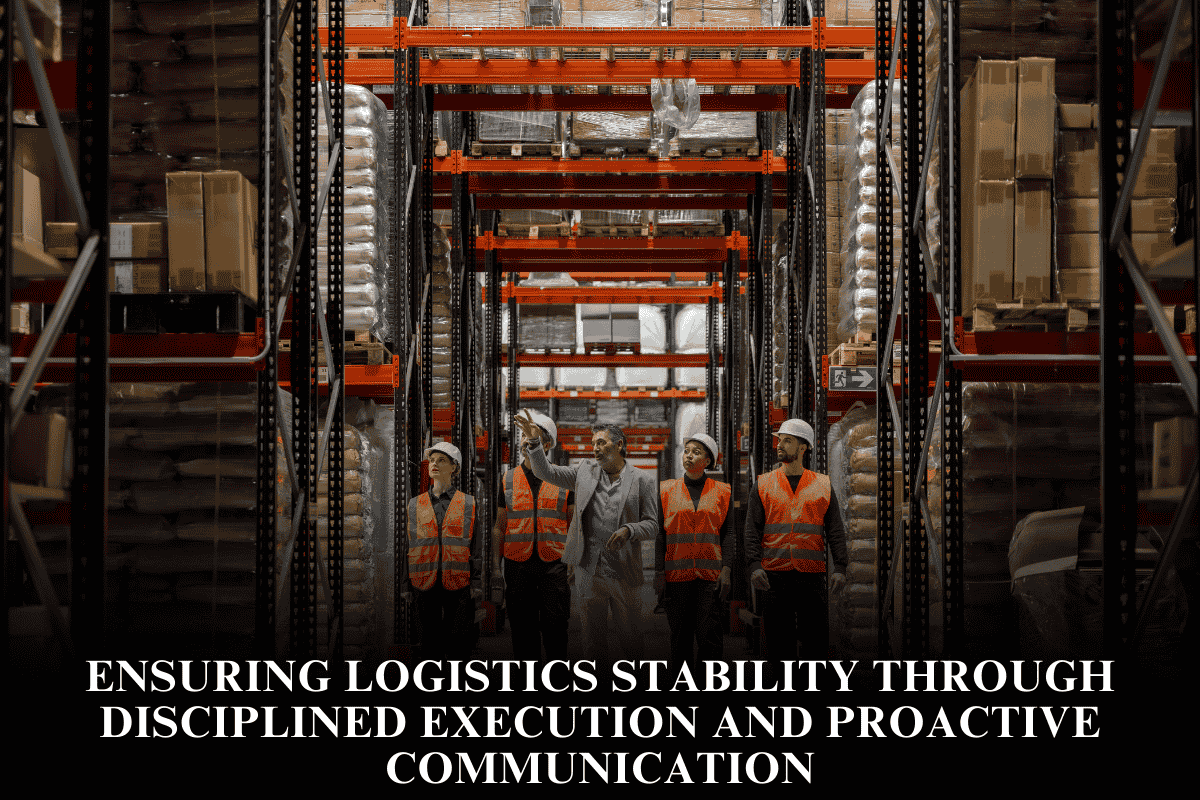
Ensuring logistics stability demands disciplined execution paired with proactive communication, turning potential chaos into predictable performance. US firms excel by embedding these pillars into operations, mitigating disruptions like tariffs and labor shortages while sustaining supply chain resilience in 2026.
Disciplined Execution Foundations
Disciplined execution starts with standardized processes across planning, execution, and monitoring. Alpega’s 2026 trends highlight regionalization—64% of manufacturers shortening lanes via hubs—which stabilizes lead times by minimizing volatile long-haul exposure. Implement modular workflows in TMS platforms for quick adjustments to capacity shifts, ensuring 95% on-time delivery even amid port delays.
Checklists enforce compliance: pre-shipment audits verify documentation under EUDR/CBAM rules, where 74% of shippers flag tariffs as top risks. Automation handles repetitive tasks like load optimization, boosting truck utilization 20-30% via AI, freeing teams for exceptions.
Proactive Communication Strategies
Forward visibility via real-time dashboards prevents surprises. ShipWTS emphasizes stability over speed—partners sharing ETAs and constraints enable early rerouting, cutting delays 25%. Daily huddles sync carriers, warehouses, and customers on risks like weather, using API/EDI for seamless data flow.
Playbooks outline disruption responses: backup lanes, carrier swaps, contingency nodes. TTi Logistics stresses collaboration—joint forecasting with suppliers reduces redundancies, aligning multi-warehouse networks for faster, greener fulfillment.
Technology as Execution Enabler
Unified TMS integrates visibility, compliance, and AI for predictive ETAs—prioritizing high-value cases like exception alerts. Regional digital twins model tariff impacts, optimizing footprints around labor markets amid talent scarcity. Cleo’s trends note blockchain for immutable records, ensuring traceability in fragmented chains.
US Case Studies
Midwest manufacturers regionalize via Chicago hubs, slashing Asia-US transit variability by 40%. Retailers like those in Supply Chain Dive reports use AI scenario planning for 2026 fragmentation, maintaining service amid retail/manufacturing pressures. DHL’s guides advocate B2B streamlining: shared platforms yield repeatable performance.
Training and Culture Building
Embed discipline through cross-training—planners learn carrier ops, drivers grasp compliance. Quarterly drills simulate strikes or tariffs, measuring response times. Unleashed Software stresses culture: reward execution over heroics, fostering accountability.
Measuring and Continuous Improvement
KPIs track stability: on-time percentage, disruption recovery (under 24 hours), communication response (under 2 hours). Monthly reviews refine playbooks, incorporating 2026 trends like sustainable modes—CO2 tracking in TMS informs carrier awards. ROI shows 15-20% cost stability vs. volatile peers.
These intertwined practices create antifragile chains, thriving under pressure.
FAQs
Q. Why regionalize for stability?
Shortens lanes, cuts volatility—64% manufacturers adopting.
Q. Key proactive comms tool?
Real-time TMS dashboards with ETA alerts and playbooks.
Q. Automation’s execution role?
20-30% utilization gains, handles repetitive risks.
Q. Top 2026 disruption?
Tariffs/compliance (74% cite as risk #1).
Q. How measure logistics stability?
95% OTIF, <24hr recovery, CO2-integrated planning.