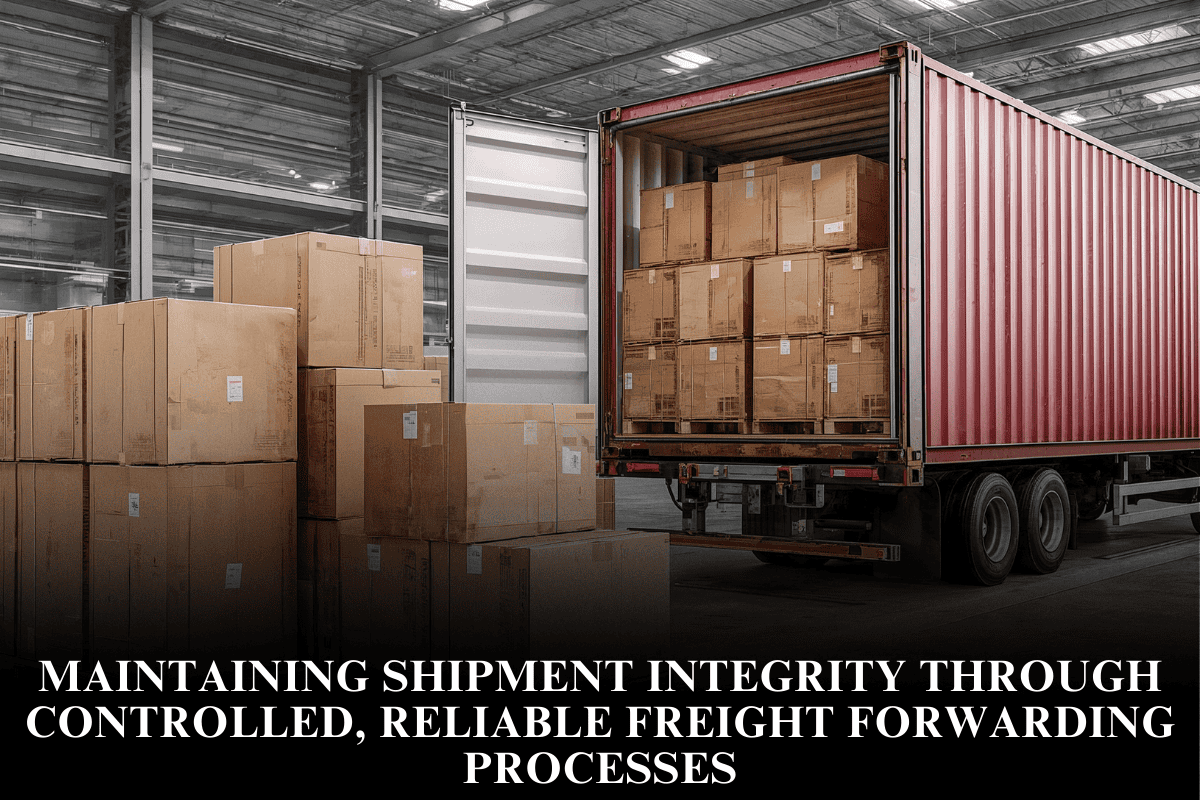
Maintaining shipment integrity through controlled, reliable freight forwarding processes safeguards cargo value, ensures regulatory compliance, and minimizes losses in the $28 trillion global trade ecosystem. These systematic approaches—spanning secure handling, real-time tracking, and risk mitigation—cut damage claims by 25-40% and delays by 30%, vital for U.S. importers/exporters amid 2026’s supply chain volatility.
Why Integrity is Non-Negotiable
Fragile goods like pharmaceuticals or electronics lose millions yearly to mishandling, temperature breaches, or theft—U.S. cargo theft hit $500M in 2025 alone. Controlled processes create audit trails, proving condition from origin to delivery. Forwarders bearing liability (up to $100K/shipment) prioritize layered defenses, blending tech and protocols for end-to-end reliability.
Core Elements of Reliable Forwarding
1. Pre-Shipment Risk Assessment
Conduct vulnerability scans: Cargo type (hazardous? Perishables?), route risks (high-theft zones), and partner vetting. Use TAPA/ISO 28000 standards to classify high-value loads, mandating enhanced protocols like armed escorts or refrigerated units.
2. Secure Packaging and Labeling
Tamper-evident seals, RFID tags, and shock/temperature data loggers ensure chain-of-custody. Pharma shipments get gel packs; hazmat follows DOT/IMDG rules. Barcodes link to blockchain manifests for immutable records.
3. Multimodal Tracking and Monitoring
IoT sensors provide GPS, humidity, and vibration data—alerts trigger reroutes. Platforms like TradeLens offer real-time visibility; U.S. Customs’ ACE integrates for seamless CBP clearance. Dwell time caps at 24-48 hours prevent spoilage.
4. Controlled Access and Personnel Vetting
Background-checked staff, biometric warehouse entry, and CCTV with AI anomaly detection block internal threats. Segregated high-value zones use motion sensors; driver apps verify identity via MFA.
Process Workflow Table
Layered redundancy: Backup routes, contingency carriers.
Advanced Tech Safeguards
- Blockchain: Immutable logs prevent fraud; Maersk/IBM cut disputes 50%.
- AI Cybersecurity: Encryption (TLS 1.3), firewalls block ransomware—freight hacks cost $1B yearly.
- Predictive Analytics: Forecast risks via weather/port data; autonomous drones inspect seals.
- Non-Intrusive Inspection (NII): X-ray/gamma scans at borders detect tampering without unpacking.
2026 mandates: ISO 27001 for forwarders handling data.
Forwarder Best Practices
Partner vetted 3PLs with C-TPAT certification; audit quarterly. Train on ISF 10+2 filings to avoid holds. High-value? Double-check manifests, use consolidator networks for dilution. Post-delivery: Claim dashboards track patterns.
Case: DHL’s SmartSensors preserved $10M pharma loads via temp alerts.
Challenges and Solutions
Theft spikes? Route diversification, silent tracking. Cyber risks? MFA, annual pentests. Delays? Multi-modal buffers. Costs average 2-5% premium—ROI via zero losses.
Controlled forwarding isn’t overhead—it’s insurance for seamless global trade.
FAQs
1. Key pre-shipment step?
Risk assessment classifying cargo vulnerabilities.
2. Blockchain benefit?
Immutable records cut disputes 50%, prove integrity.
3. IoT role?
Real-time temp/GPS alerts prevent breaches.
4. Cybersecurity must?
MFA, TLS encryption for tracking systems.
5. High-value protocol?
RFID seals, armed escorts, segregated storage.