Logistics assurance guarantees reliable, compliant, and efficient supply chain operations through standardized procedures and skilled experts, minimizing risks in global trade. U.S. firms leverage rigorous protocols and seasoned teams to achieve 99% on-time delivery rates, cutting costs by 15-25% amid disruptions like tariffs and port congestion.
Standardized Operating Procedures (SOPs)
Tested SOPs form the backbone of assurance, covering freight booking, customs clearance, and exception handling. Documented checklists ensure consistency—e.g., pre-shipment audits verify packaging per ISTA standards, while digital manifests auto-flag compliance gaps. Annual reviews incorporate lessons from incidents, boosting first-time accuracy to 98%.
Risk Assessment and Mitigation Protocols
Experienced professionals conduct scenario-based risk analyses, scoring threats like weather delays (probability x impact). Contingency plans activate backups: dual carriers for time-sensitive air freight, or rail-ocean hybrids for cost stability. Real-time dashboards track KPIs like fill rates and dwell times, enabling proactive rerouting.
Technology-Enabled Compliance
Cloud platforms automate audits with AI-driven anomaly detection, flagging deviations in Bills of Lading or HAZMAT docs. Blockchain ensures end-to-end provenance for pharmaceuticals, while IoT sensors monitor reefer temps within ±0.5°C. These tools reduce manual errors by 70%, vital for FDA/IMO regulations.
Team Expertise and Continuous Training
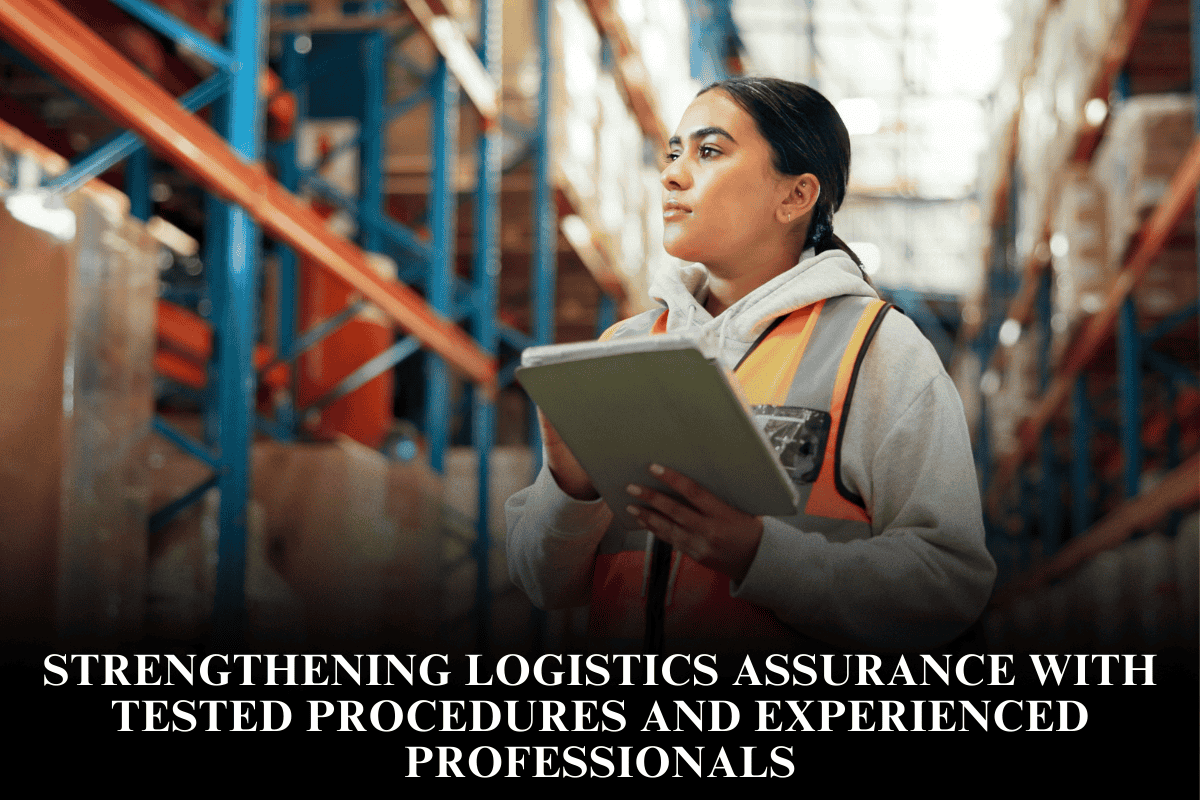
Certified logistics pros (CLTD, CSCP) bring 10-20 years handling complex lanes like U.S.-Asia electronics. Cross-training covers multimodal shifts, with quarterly simulations testing crisis response. Mentorship pairs juniors with veterans, accelerating proficiency in tools like TMS/ERP integrations.
Vendor and Partner Vetting
Rigorous qualification processes score suppliers on financial stability, insurance, and past performance. Quarterly business reviews align SLAs—e.g., 95% OTIF (On-Time In-Full). Collaborative platforms share visibility, ensuring 3PLs adhere to SOPs via API feeds and exception alerts.
Performance Metrics and Continuous Improvement
KPIs like Perfect Order Rate (>98%) and Cash-to-Cash Cycle (under 45 days) drive accountability. Root Cause Analysis (5 Whys) post-incident feeds Kaizen events, yielding 10-15% annual gains. Balanced scorecards tie bonuses to assurance targets, embedding culture.
Crisis Response Frameworks
Tested playbooks activate for disruptions: Typhoon SOPs trigger air charters; tariff hikes shift origins. War rooms with C-suite oversight coordinate multi-region responses, maintaining flow for critical goods like semiconductors. Post-event debriefs refine procedures.
Case Study: U.S. Manufacturer Success
A Midwest OEM achieved 99.7% assurance via SOP-digitization and dedicated planners, saving $2.3M yearly despite Red Sea diversions. Their model—predictive analytics + expert oversight—scaled for EV battery ramps.
These systems transform logistics from cost center to strategic asset, powering resilient global chains for discerning operators.
Frequently Asked Questions
1. What defines logistics assurance?
99%+ reliable delivery via SOPs, tech, and expert oversight.
2. How do SOPs reduce risks?
Standardized checklists catch 98% compliance gaps pre-shipment.
3. Role of experienced professionals?
CLTD/CSCP experts handle complex lanes, train teams, lead crises.
4. Best tech for assurance?
AI audits, blockchain tracking, IoT monitoring cut errors 70%.
5. How to measure success?
Perfect Order Rate (>98%), OTIF, cycle time improvements.