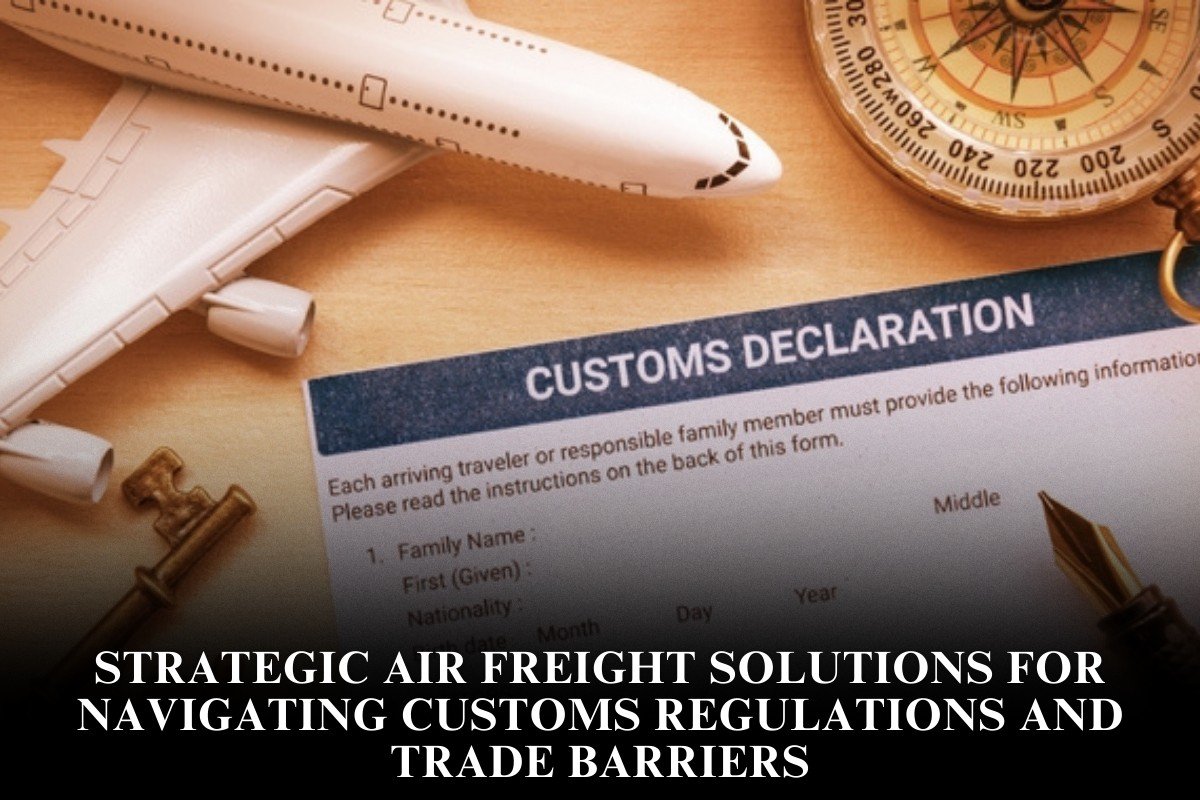
International trade presents vast growth opportunities, but it also comes with complex customs regulations and trade barriers. From varying import/export laws to tariffs, documentation requirements, and compliance checks, navigating global shipping regulations can be challenging. Strategic air freight solutions help businesses manage these complexities efficiently while minimizing delays and compliance risks.
Understanding Customs Regulations and Trade Barriers
Customs regulations differ from country to country and govern the movement of goods across borders. Trade barriers may include tariffs, quotas, licensing requirements, embargoes, and product restrictions.
Common Regulatory Challenges:
- Incomplete or incorrect documentation
- Misclassification of goods
- Changing tariff rates
- Import/export licensing requirements
- Country-specific compliance standards
- Product safety and labeling regulations
Without proper planning, these factors can lead to shipment delays, fines, or cargo confiscation.
Importance of Strategic Air Freight Planning
Strategic air freight planning focuses on proactive compliance, risk mitigation, and streamlined logistics management.
Key Objectives:
- Ensure documentation accuracy
- Reduce customs clearance time
- Avoid unexpected duties and penalties
- Maintain consistent delivery timelines
- Improve global supply chain visibility
Air freight’s speed makes it ideal for time-sensitive shipments, but success depends on regulatory preparedness.
Documentation Accuracy and Pre-Clearance
One of the most effective strategies for minimizing customs delays is accurate documentation.
Essential Documents Include:
- Commercial invoice
- Packing list
- Bill of airway bill
- Certificate of origin
- Import/export licenses
- Insurance certificates
Strategic freight providers often conduct document audits before departure to ensure compliance with destination country requirements.
Documentation Control Overview
| Document Type | Purpose | Risk If Incorrect |
|---|---|---|
| Commercial Invoice | Declares value and goods details | Customs delay or penalties |
| Certificate of Origin | Confirms manufacturing source | Tariff miscalculation |
| Airway Bill | Shipment contract | Clearance complications |
| Import License | Legal authorization | Shipment rejection |
Pre-clearance services can significantly reduce inspection time at arrival.
Tariff Optimization and Trade Compliance
Strategic freight planning also involves tariff management.
Key Approaches:
- Proper Harmonized System (HS) code classification
- Leveraging free trade agreements (FTAs)
- Utilizing duty drawback programs
- Understanding country-specific tax structures
Correct classification prevents overpayment of duties and reduces compliance risks.
Leveraging Customs Brokerage Services
Professional customs brokers play a crucial role in managing international trade regulations.
Benefits of Customs Brokerage:
- Expert guidance on regulatory changes
- Assistance with complex documentation
- Faster customs clearance
- Reduced risk of compliance errors
- Communication with local authorities
Partnering with experienced brokers ensures smoother cross-border shipments.
Multi-Route and Multi-Carrier Flexibility
Strategic air freight solutions include route diversification.
Advantages:
- Avoiding politically sensitive regions
- Rerouting around trade-restricted zones
- Using alternative hubs with simplified clearance procedures
- Accessing bonded warehouses
Flexible routing helps mitigate risks related to geopolitical or regulatory changes.
Technology and Real-Time Compliance Monitoring
Digital logistics tools enhance regulatory compliance.
Technology-Driven Solutions:
- Real-time shipment tracking
- Automated compliance checks
- Electronic data interchange (EDI) submissions
- Integrated customs documentation systems
- AI-driven risk assessment tools
Automation reduces human error and speeds up approval processes.
Managing Trade Barriers Proactively
Trade barriers such as quotas and sanctions require careful planning.
Strategic Actions Include:
- Monitoring international trade policy updates
- Maintaining alternative supplier networks
- Diversifying export markets
- Securing necessary certifications in advance
- Planning inventory buffers for regulated markets
Proactive risk management ensures business continuity.
Benefits of Strategic Air Freight Solutions
Implementing structured air freight strategies provides:
- Reduced customs clearance times
- Lower compliance penalties
- Optimized duty payments
- Enhanced supply chain reliability
- Improved customer satisfaction
- Greater operational resilience
Strategic planning transforms regulatory complexity into manageable processes.
When to Adopt Strategic Freight Solutions
Businesses should consider structured air freight strategies if they:
- Ship high-value goods internationally
- Operate in highly regulated industries
- Frequently encounter customs delays
- Expand into new international markets
- Handle time-sensitive or perishable cargo
Strategic planning is especially important for pharmaceuticals, electronics, aerospace components, and luxury goods.
FAQs
How can air freight reduce customs delays?
Accurate documentation, pre-clearance services, and experienced customs brokerage significantly speed up clearance.
What is the importance of HS code classification?
Correct HS code classification ensures accurate tariff calculation and prevents regulatory penalties.
Can strategic planning lower import duties?
Yes, leveraging trade agreements and duty optimization programs can reduce costs.
Are customs brokers necessary for all shipments?
While not mandatory in all cases, brokers greatly simplify compliance and reduce errors.
How can businesses stay updated on trade regulations?
Regularly monitor government trade portals, industry associations, and logistics partners for policy updates.