In an increasingly interconnected global economy, speed, reliability, and coordination are essential to successful international trade. Air freight plays a critical role in moving high-value, time-sensitive, and perishable goods across borders. However, air transport alone is not enough. Integrated air freight solutions—combining transportation, technology, customs expertise, and supply chain coordination—are now fundamental to supporting efficient and resilient international trade operations.
Understanding Integrated Air Freight Solutions
Integrated air freight solutions go beyond simple airport-to-airport transportation. They involve the seamless coordination of multiple services, including pickup, consolidation, air transport, customs clearance, warehousing, last-mile delivery, and real-time visibility.
By managing these elements as a single, connected process, integrated solutions reduce fragmentation, minimize delays, and ensure goods move smoothly from origin to destination across international borders.
Supporting Speed and Time-Critical Trade
One of the primary advantages of air freight is speed. Integrated solutions enhance this advantage by eliminating handoff delays and miscommunication between service providers.
When transportation, documentation, and customs processes are aligned, shipments move faster through each stage of the journey. This is especially critical for industries such as pharmaceuticals, electronics, aerospace, and fashion, where delays can result in lost revenue or compliance risks.
Improving Supply Chain Visibility and Control
International trade involves multiple stakeholders, time zones, and regulatory environments. Without integration, visibility gaps can lead to uncertainty and reactive decision-making.
Integrated air freight solutions provide centralized tracking and reporting, allowing shippers to monitor shipment status, anticipate delays, and respond proactively. Greater visibility improves planning accuracy, inventory control, and customer communication across global operations.
Enhancing Customs and Regulatory Compliance
Customs clearance is one of the most complex aspects of international trade. Integrated air freight solutions incorporate customs expertise and compliance management into the logistics process.
By preparing accurate documentation, classifying goods correctly, and coordinating with customs authorities in advance, integrated providers reduce clearance delays and avoid costly penalties. This proactive compliance approach supports smoother cross-border trade and reduces operational risk.
Streamlining Multimodal Coordination
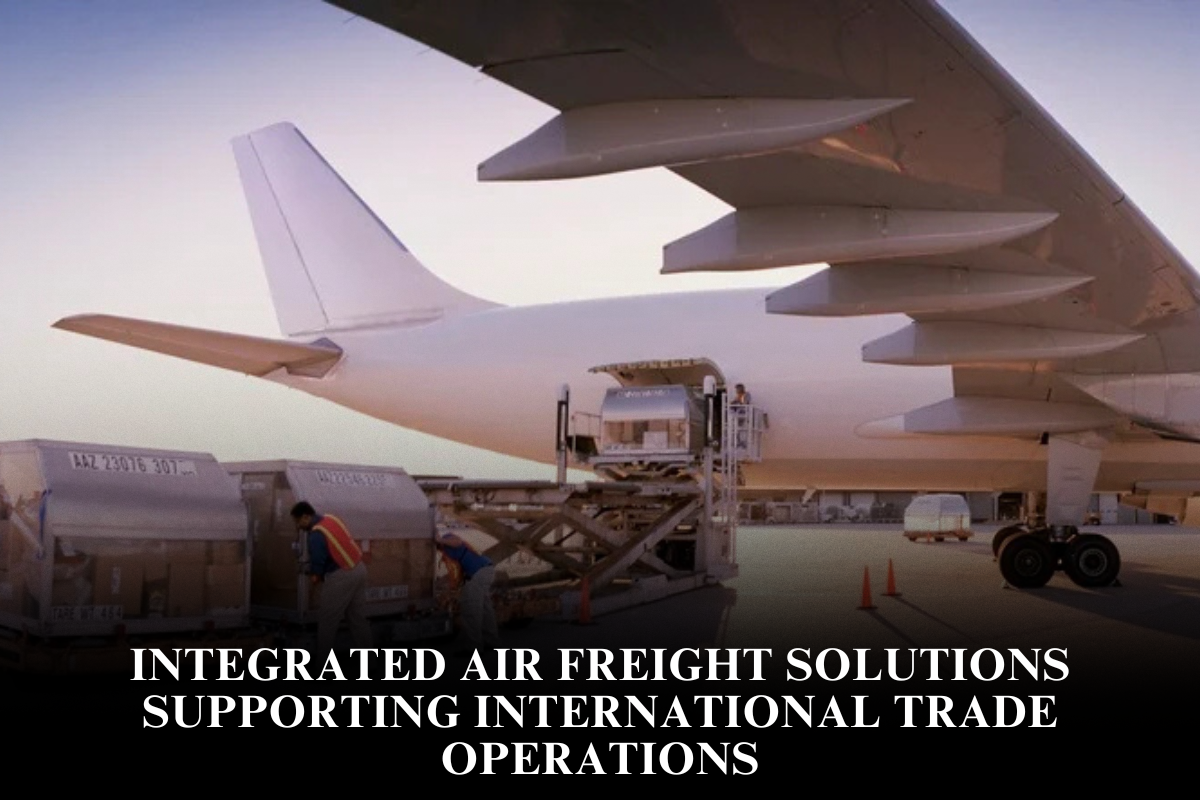
International shipments rarely rely on air transport alone. Integrated air freight solutions coordinate air transport with ground handling, warehousing, and final delivery to create a unified multimodal flow.
This coordination ensures that cargo arrives when downstream resources are ready, reducing dwell time at airports and warehouses. Smooth multimodal transitions are essential for maintaining delivery timelines and controlling costs.
Supporting Scalability in Global Trade
As businesses expand into new markets, logistics complexity increases. Integrated air freight solutions provide scalable frameworks that adapt to changing volumes, destinations, and regulatory requirements.
Rather than building new logistics processes for each market, companies can rely on integrated systems that support consistent service levels across regions. This scalability enables faster market entry and more confident global expansion.
Reducing Costs Through Efficiency and Predictability
While air freight is often associated with higher transportation costs, integration helps control overall logistics expenses. By reducing delays, minimizing rework, and improving planning accuracy, integrated solutions lower indirect costs such as storage, expedited shipping, and service recovery.
Predictable performance also allows businesses to optimize inventory levels, reducing carrying costs while maintaining service reliability.
Strengthening Risk Management and Resilience
Global trade is exposed to disruptions ranging from weather events and capacity constraints to geopolitical changes. Integrated air freight solutions improve resilience by enabling faster response and contingency planning.
With centralized oversight and coordinated partners, alternative routes, carriers, or schedules can be activated quickly when disruptions occur. This agility helps protect trade flows and customer commitments under uncertain conditions.
Enabling High-Value and Sensitive Shipments
Certain goods require specialized handling, such as temperature-controlled cargo, hazardous materials, or high-security items. Integrated air freight solutions ensure that handling requirements are maintained consistently across the entire journey.
End-to-end control reduces the risk of damage, loss, or non-compliance, making integrated solutions ideal for sensitive international trade operations.
Aligning Logistics With Business Strategy
Integrated air freight is not just an operational function—it is a strategic enabler. By aligning logistics performance with business goals such as speed-to-market, customer satisfaction, and risk reduction, companies gain a competitive advantage in global trade.
Logistics becomes a coordinated extension of the business rather than a fragmented support function.
Frequently Asked Questions (FAQ)
Q. What makes air freight solutions “integrated”
They combine transportation, customs, technology, and coordination into a single, end-to-end logistics process.
Q. Why are integrated solutions important for international trade
They reduce delays, improve visibility, ensure compliance, and support reliable cross-border operations.
Q. Are integrated air freight solutions only for large companies
No. Businesses of all sizes benefit from integration, especially when managing complex or time-sensitive shipments.
Q. How do integrated solutions improve delivery timelines
By coordinating handoffs, reducing dwell time, and proactively managing customs and documentation.
Q. Do integrated air freight solutions reduce risk
Yes. Centralized control and visibility improve response to disruptions and compliance challenges.
Integrated air freight solutions are a cornerstone of modern international trade operations. By unifying transportation, compliance, visibility, and coordination, these solutions enable faster, more reliable, and more resilient global supply chains. In a trade environment where speed and certainty are critical, integration transforms air freight from a transport option into a strategic advantage for businesses operating across borders.