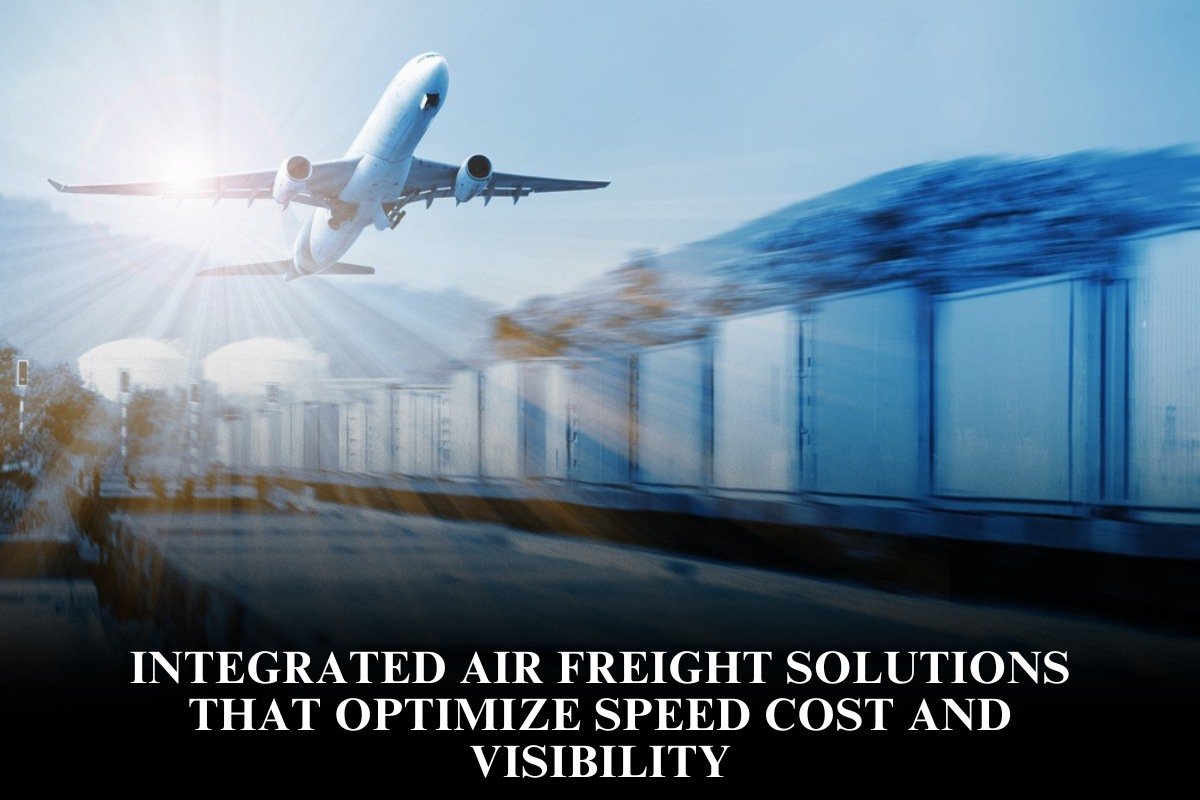
In the fast-paced world of global commerce, businesses increasingly rely on air freight to meet customer demands for speed, efficiency, and reliability. However, the high costs associated with air cargo, coupled with the complexity of managing shipments across multiple touchpoints, present significant challenges. Integrated air freight solutions are designed to optimize not only the speed and cost of air transportation but also the visibility and transparency that are critical for modern supply chains.
An integrated air freight solution involves the seamless coordination of various stakeholders, technologies, and logistical processes to deliver timely, cost-effective, and transparent air cargo services. By aligning all components of the air freight process— from booking to delivery— businesses can achieve a better balance of speed, cost, and visibility, which in turn drives operational efficiency and customer satisfaction.
The Role of Air Freight in Global Supply Chains
Air freight plays a crucial role in supply chains that require rapid delivery, especially for high-value, time-sensitive, and perishable goods. With the ability to move products across the globe in a matter of hours, air cargo enables companies to meet tight deadlines, maintain product freshness, and maintain competitiveness in a global market.
However, air freight is also one of the most expensive modes of transportation. The challenge lies in balancing the need for speed and reliability with the cost constraints of the business. Integrated air freight solutions aim to reduce this cost while maintaining the efficiency and speed that air cargo offers.
The Benefits of Integrated Air Freight Solutions
Integrated air freight solutions provide businesses with a comprehensive, coordinated approach to managing air cargo. Key benefits include:
1. Optimizing Speed
One of the primary advantages of air freight is speed, particularly for time-sensitive goods. Integrated solutions optimize this by streamlining processes and reducing bottlenecks. For example:
- Automated booking and tracking systems improve operational efficiency and reduce delays.
- Real-time route optimization allows for better planning and rerouting in case of disruptions like weather delays or air traffic.
By coordinating all aspects of air transport in an integrated solution, businesses can significantly reduce transit times and increase the reliability of their shipments.
2. Controlling Costs
While air freight is inherently more expensive than sea or ground transportation, integrated solutions can help manage costs through improved efficiency. By combining various services into a single streamlined process, businesses can:
- Consolidate shipments to maximize cargo space and reduce unit costs.
- Negotiate better rates through long-term partnerships with carriers and logistics providers.
- Optimize routes and schedules to minimize the costs associated with delays and inefficiencies.
An integrated approach enables businesses to get the most value out of their air freight investments while still benefiting from the speed of air transportation.
3. Enhancing Visibility
Visibility is critical in today’s supply chains, where businesses need to track shipments in real time and quickly respond to any issues that may arise. Integrated air freight solutions provide enhanced visibility through:
- Advanced tracking systems that allow businesses to monitor their shipments throughout the entire journey.
- Data integration across all touchpoints, including air carriers, ground handlers, and customs authorities, ensuring that every party has access to up-to-date information.
Increased visibility improves decision-making, helps businesses anticipate problems before they escalate, and enhances overall customer satisfaction by providing accurate delivery timeframes.
4. Streamlining Documentation and Compliance
Air freight shipments are subject to complex regulations and documentation requirements, which can be time-consuming and prone to error. An integrated system helps automate documentation and compliance processes, ensuring that:
- Customs clearance is expedited by providing pre-arrival documentation and reducing the likelihood of delays.
- Export and import procedures are synchronized, helping businesses avoid costly fines or penalties due to paperwork errors.
Automation of these processes improves the speed of shipments, reduces administrative burdens, and ensures regulatory compliance.
5. Improving Customer Satisfaction
By optimizing speed, cost, and visibility, integrated air freight solutions can significantly enhance the customer experience. Faster deliveries, accurate tracking, and reliable service lead to increased customer satisfaction and loyalty. In industries like e-commerce, electronics, and pharmaceuticals, the ability to deliver high-demand products quickly can be a competitive advantage.
Key Components of Integrated Air Freight Solutions
To deliver these benefits, integrated air freight solutions bring together several key components:
1. Digital Platforms and Automation
Technology plays a critical role in streamlining air freight operations. Digital platforms enable businesses to manage bookings, track shipments, automate paperwork, and provide real-time data. This digital infrastructure ensures that all stakeholders in the supply chain have access to the same information and can act quickly to resolve any issues.
2. Multimodal Connectivity
While air freight is a key component of global supply chains, it often requires integration with other transportation modes, such as sea, rail, and road, to complete the journey. Integrated solutions ensure smooth transitions between air and other transport modes, reducing delays and improving efficiency.
3. Collaborative Partnerships
Air freight solutions work best when businesses collaborate with a network of logistics providers, air carriers, and ground handlers. Strategic partnerships allow businesses to negotiate better terms, consolidate shipments, and streamline operations. Strong partnerships also help mitigate disruptions and ensure that supply chain stakeholders can respond quickly to changing conditions.
4. Supply Chain Visibility Tools
End-to-end visibility is made possible by integrating various tracking technologies and communication systems that connect air cargo operators, warehouses, and customs authorities. These tools enable real-time updates, proactive issue resolution, and enhanced communication with customers.
5. Flexibility and Scalability
Integrated air freight solutions are designed to be flexible and scalable, allowing businesses to adjust their logistics plans based on demand fluctuations, seasonal variations, or global events. This adaptability ensures that businesses can remain competitive even in the face of unforeseen disruptions.
Overcoming Challenges in Air Freight
Despite its advantages, air freight faces challenges such as capacity limitations, high fuel costs, and environmental concerns. To mitigate these challenges, businesses must:
- Invest in efficient cargo management to ensure that every shipment maximizes available space and weight capacity.
- Optimize scheduling to avoid peak periods where congestion or delays may occur.
- Adopt sustainability practices that reduce carbon footprints and contribute to long-term environmental sustainability.
Innovative solutions that address these challenges help air freight become a more cost-effective and environmentally friendly mode of transportation.
Frequently Asked Questions (FAQ)
1. What is an integrated air freight solution?
An integrated air freight solution combines various logistics services, technologies, and stakeholders to streamline the process of air cargo transport, optimizing speed, cost, and visibility.
2. How does an integrated solution optimize cost?
By consolidating shipments, improving efficiency, and offering better-negotiated rates through partnerships, integrated air freight solutions reduce costs.
3. Why is visibility important in air freight?
Visibility enables businesses to track shipments in real-time, anticipate potential issues, and provide accurate delivery information to customers.
4. How can technology help air freight operations?
Technology helps automate booking, tracking, documentation, and communication, improving speed and reducing errors.
5. Can integrated air freight solutions support sustainable practices?
Yes, by optimizing cargo space, reducing fuel consumption, and adopting greener technologies, integrated solutions can contribute to environmental sustainability.
6. What role do partnerships play in air freight?
Collaborative partnerships allow businesses to access better rates, consolidate shipments, and ensure smoother logistics operations.
7. How does air freight differ from other modes of transportation?
Air freight is faster but more expensive compared to sea or road transport. It is ideal for time-sensitive, high-value, or perishable goods.