In today’s fast-paced and interconnected world, managing a global supply chain has become increasingly complex. Companies are tasked with sourcing materials, manufacturing products, and delivering them to customers across continents—all while navigating a maze of logistics, regulations, and operational challenges. Air freight plays a crucial role in this global ecosystem, offering the speed, efficiency, and reliability needed to keep supply chains moving smoothly.
End-to-end air freight solutions provide comprehensive services that address the entire shipping process, from the initial pick-up of goods to their final delivery to the customer. By leveraging a full-service approach, businesses can ensure that their global supply chains remain efficient, cost-effective, and resilient. In this article, we will explore how end-to-end air freight solutions work and why they are essential for managing complex global supply chains.
What Are End-to-End Air Freight Solutions?
End-to-end air freight solutions involve the management and coordination of all stages of air cargo transport. This includes everything from booking and collection, to customs clearance, storage, and final delivery to the customer. These solutions ensure that the entire transportation process is streamlined and handled by a single provider or network of partners, simplifying logistics and reducing potential disruptions.
An end-to-end air freight solution typically includes the following stages:
1. Pick-Up and Collection
Goods are collected from the origin point, whether it’s a warehouse, manufacturer, or supplier. This stage may also involve packaging and preparing goods for transport. For international shipments, this step includes organizing the necessary documentation, such as invoices, packing lists, and certificates.
2. Customs and Compliance
Before goods can be shipped across borders, they must pass through customs. An end-to-end air freight solution manages customs clearance for international shipments, ensuring that all documentation is accurate and in compliance with local regulations. This process includes paying duties and taxes, submitting import/export declarations, and complying with safety standards.
3. Air Freight Transportation
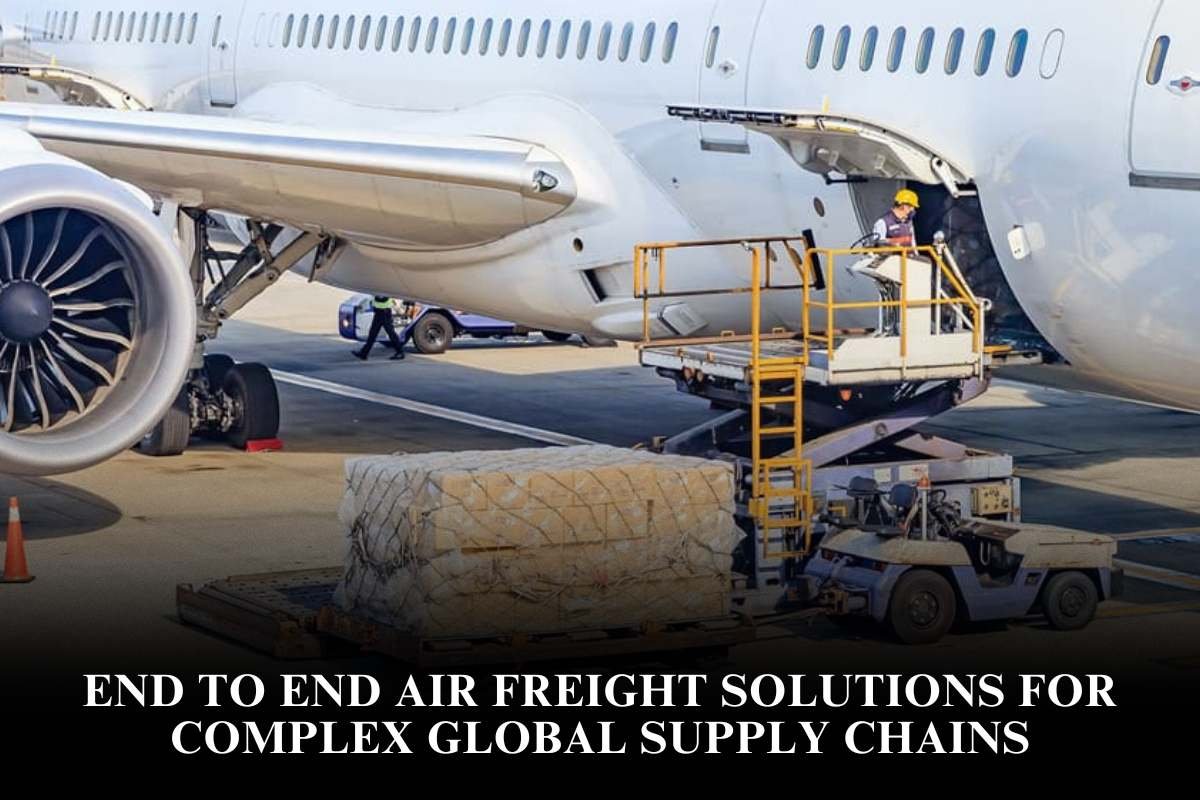
Once the goods are cleared for transit, they are loaded onto an aircraft for transport. This phase includes choosing the best routes, managing flight schedules, and ensuring proper handling of goods, including temperature control if needed. Air freight providers optimize this process to minimize transit times and avoid delays.
4. Storage and Handling
During transit, goods may need to be temporarily stored in warehouses at transit hubs. End-to-end solutions often involve a network of warehouses and distribution centers around the world where goods can be stored securely and handled efficiently before the final delivery.
5. Last-Mile Delivery
After arriving at the destination airport, goods are transferred to a local transport service for the final leg of the journey. This is the last-mile delivery phase, where goods are delivered to their final destination—whether it’s a retail location, distribution center, or directly to the customer.
6. Tracking and Visibility
Throughout the process, end-to-end air freight solutions offer full tracking and visibility. This allows businesses to monitor the status of their shipments in real time, providing updates and ensuring transparency. Many providers offer digital platforms that allow customers to track their goods, receive notifications, and manage their logistics from a single interface.
Why End-to-End Air Freight Solutions Are Crucial for Complex Global Supply Chains
Managing a global supply chain involves navigating a complex network of suppliers, manufacturers, and customers across different regions. Air freight solutions provide several key benefits to help streamline this process and improve supply chain efficiency.
1. Speed and Efficiency
Air freight is the fastest mode of transportation available, especially for time-sensitive shipments. For businesses with complex global supply chains, speed is critical to meet customer demands, keep inventory levels low, and maintain just-in-time manufacturing practices. With end-to-end solutions, companies can expedite the entire shipping process, reducing lead times and improving customer satisfaction.
Air freight also offers more direct routes compared to other forms of transport, minimizing the chances of delays and ensuring faster delivery times. This helps businesses meet market demands more efficiently and gain a competitive edge.
2. End-to-End Coordination and Reduced Complexity
Managing multiple vendors for different parts of the supply chain can be a headache. By using end-to-end air freight solutions, businesses can rely on a single point of contact for all logistics needs, reducing complexity and streamlining communication. This eliminates the need to coordinate with different carriers, customs brokers, and handling agents, saving time and reducing the risk of errors.
End-to-end solutions ensure that all stages of the process are aligned, from collection to delivery. This unified approach allows for smoother operations and more predictable outcomes.
3. Risk Mitigation and Reliability
Global supply chains are vulnerable to a range of risks, including geopolitical instability, weather disruptions, and transportation bottlenecks. End-to-end air freight solutions provide greater control and visibility over the entire logistics process, making it easier to anticipate and mitigate potential risks.
For example, air freight providers can monitor real-time data and adapt flight routes or schedules in response to unexpected disruptions, such as inclement weather or air traffic delays. This proactive approach helps reduce the impact of these risks on the supply chain and ensures more reliable deliveries.
4. Customs Compliance and Regulatory Support
Navigating customs regulations and compliance is one of the most challenging aspects of global air freight. End-to-end air freight solutions offer support in this area by managing the entire customs clearance process, ensuring that shipments comply with local import and export regulations.
This reduces the likelihood of customs delays, fines, or penalties that could disrupt the flow of goods. Additionally, many air freight providers have teams dedicated to keeping up with regulatory changes, which helps businesses stay informed and compliant in an ever-evolving landscape.
5. Cost Optimization
While air freight is typically more expensive than sea or land transport, end-to-end solutions can help optimize costs through improved logistics planning. By consolidating shipments, optimizing flight routes, and minimizing delays, businesses can reduce the overall cost of air freight.
Additionally, by managing the entire supply chain, air freight providers can identify cost-saving opportunities, such as volume discounts for frequent shipments, optimized warehousing, and handling services, and streamlined customs procedures.
6. Increased Transparency and Real-Time Visibility
One of the biggest advantages of end-to-end air freight solutions is the ability to track shipments in real time. Businesses can access live updates on the location and status of their goods, providing greater transparency throughout the shipping process.
This visibility allows companies to make informed decisions, such as rescheduling deliveries, adjusting inventory levels, or taking corrective action in response to delays. Real-time tracking also improves customer communication, as businesses can proactively inform customers about the status of their shipments.
Challenges in Implementing End-to-End Air Freight Solutions
While end-to-end air freight solutions offer numerous benefits, they are not without challenges. These challenges include:
- High Costs: Air freight is generally more expensive than other modes of transportation, and managing the entire supply chain through air freight can drive up costs. Businesses must balance the need for speed with cost optimization.
- Capacity Limitations: Air cargo capacity is limited compared to sea freight, and space on flights may be restricted, especially during peak seasons. Businesses must plan ahead to secure the necessary capacity.
- Dependence on Weather and External Factors: Air freight is susceptible to delays caused by weather conditions, air traffic, and other unforeseen events. While end-to-end solutions help mitigate these risks, businesses must still account for external factors that may disrupt operations.
Optimizing Global Supply Chains with End-to-End Air Freight Solutions
End-to-end air freight solutions offer a streamlined, efficient way to manage complex global supply chains. By providing a comprehensive approach to logistics, including transportation, customs clearance, storage, and last-mile delivery, businesses can improve speed, reduce risk, and enhance the overall customer experience. With the right strategic approach, air freight can be an integral part of an agile, global supply chain that is resilient, cost-effective, and responsive to market demands.
By leveraging end-to-end solutions, businesses can better connect markets worldwide, ensuring that goods move quickly, efficiently, and securely, regardless of where they are needed. These solutions play a crucial role in driving global commerce and helping businesses meet the challenges of an increasingly interconnected world.
FAQs
What is an end-to-end air freight solution?
An end-to-end air freight solution involves the management of all aspects of air cargo transport, including pick-up, customs clearance, transportation, storage, and last-mile delivery, providing a seamless logistics process.
How do end-to-end air freight solutions reduce complexity?
By consolidating services under one provider, businesses avoid having to coordinate with multiple vendors, which simplifies the process and reduces potential communication issues or delays.
What are the benefits of real-time tracking in air freight?
Real-time tracking allows businesses to monitor the status of their shipments, adjust plans as needed, and communicate updates to customers, improving transparency and reducing delays.
Are end-to-end air freight solutions cost-effective?
While air freight can be more expensive, end-to-end solutions optimize logistics and provide greater visibility, which can help reduce overall costs through better planning, volume discounts, and improved efficiency.
What challenges might businesses face with end-to-end air freight solutions?
Challenges include higher costs compared to other transport methods, limited air cargo capacity, and dependence on external factors such as weather conditions and air traffic.