International air cargo networks operate across borders, time zones, regulatory systems, and organizational cultures. In such a complex environment, reliability does not happen by chance—it is built through consistency. Standardized procedures play a critical role in ensuring that air cargo moves safely, efficiently, and predictably from origin to destination. By reducing variation and uncertainty, standardized processes significantly increase reliability across global air freight operations.
Understanding Standardized Procedures in Air Cargo
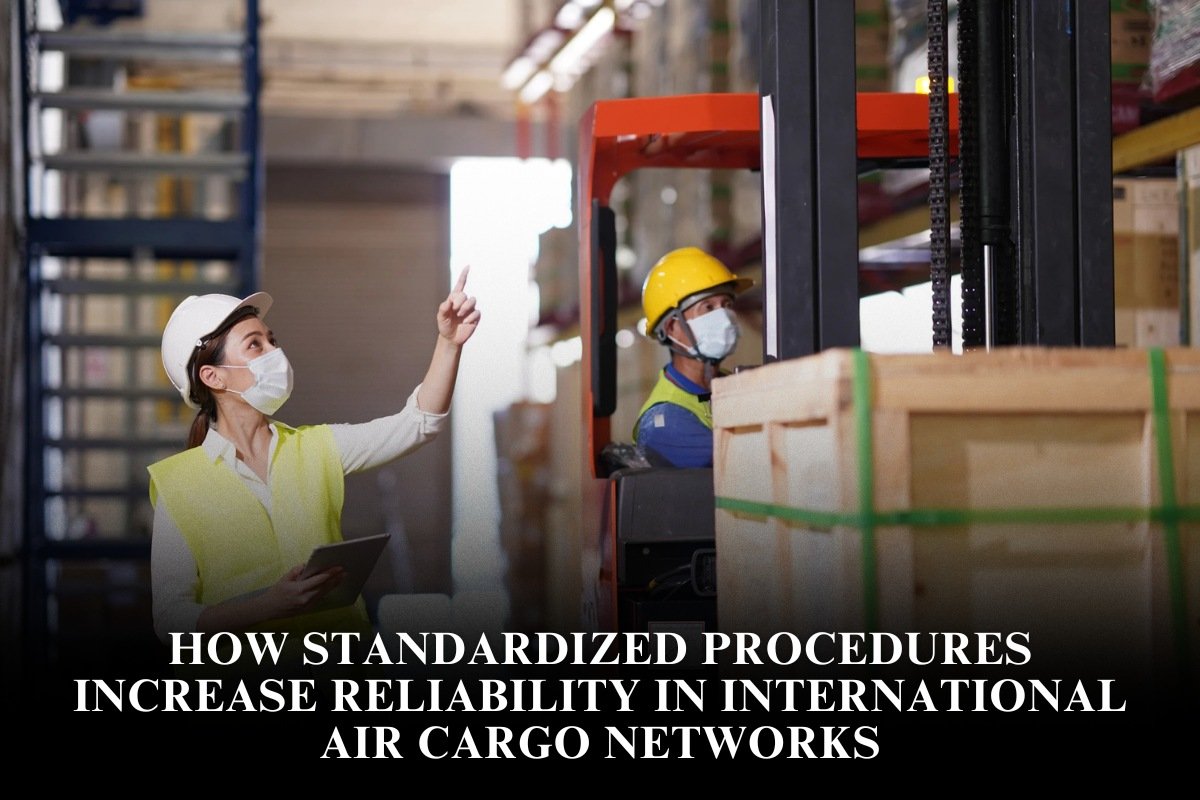
Standardized procedures refer to clearly defined, documented, and consistently applied methods for handling air cargo at every stage of the journey. These procedures cover activities such as booking, documentation, security screening, ground handling, loading, unloading, customs clearance, and delivery coordination.
In international air cargo networks, standardization ensures that different airports, handlers, carriers, and partners follow the same expectations and workflows, regardless of location. This consistency forms the backbone of reliable global operations.
Reducing Errors and Miscommunication
One of the biggest threats to reliability in air cargo is human error, often caused by unclear instructions or inconsistent practices. Standardized procedures reduce ambiguity by clearly defining how tasks should be performed and who is responsible at each step.
When documentation formats, labeling requirements, and handling instructions are standardized, the risk of misinterpretation drops significantly. Fewer errors mean fewer delays, missed connections, and damaged shipments—directly improving on-time performance.
Improving Predictability and Schedule Adherence
Reliability depends heavily on predictability. Standardized procedures allow air cargo operations to follow repeatable timelines, making it easier to plan and execute shipments accurately.
When cargo is processed the same way at every hub, planners can better estimate handling times, transfer windows, and departure schedules. This predictability supports tighter connections, more accurate delivery commitments, and higher overall network reliability.
Enhancing Safety and Security Compliance
International air cargo is subject to strict safety and security regulations. Standardized procedures ensure that compliance requirements are met consistently across all locations.
Uniform screening processes, secure handling protocols, and standardized documentation reduce the risk of security breaches or regulatory violations. This consistency not only protects cargo but also prevents disruptions caused by inspections, fines, or shipment holds.
Enabling Seamless Global Coordination
Air cargo networks rely on coordination among multiple stakeholders, including airlines, ground handlers, freight forwarders, customs authorities, and last-mile providers. Standardized procedures create a common operational language that enables seamless collaboration.
When every participant understands the same processes and expectations, handoffs between organizations become smoother. This alignment reduces friction at transfer points, which are often the weakest links in international cargo movements.
Supporting Technology Integration and Automation
Modern air cargo networks increasingly rely on digital systems and automation. Standardized procedures are essential for these technologies to function effectively.
Automation works best when inputs and processes are consistent. Standard data formats, scanning procedures, and reporting protocols allow systems to track shipments accurately, flag exceptions, and provide real-time visibility. This technological reliability reinforces operational reliability across the network.
Managing Disruptions More Effectively
Disruptions such as weather events, congestion, or capacity shortages are inevitable in global air cargo. Standardized procedures help networks respond more effectively by providing predefined contingency actions and escalation paths.
When teams know exactly how to respond to exceptions, decisions are made faster and with greater confidence. This structured response minimizes the impact of disruptions and helps restore normal operations quickly.
Training, Accountability, and Continuous Improvement
Standardized procedures simplify training and performance management. New staff can be onboarded more quickly, and performance can be measured against clear benchmarks.
Consistency also supports continuous improvement. When processes are standardized, deviations and inefficiencies are easier to identify and correct. Over time, this leads to incremental reliability gains across the entire network.
Building Trust With Customers and Partners
From the customer’s perspective, reliability means cargo arrives on time, intact, and with accurate information. Standardized procedures help deliver this consistency repeatedly, building trust and confidence.
For partners, standardization signals professionalism and dependability. It strengthens long-term relationships and makes international air cargo networks more resilient and competitive.
FAQs
What are standardized procedures in air cargo?
They are consistent, documented methods for handling cargo across booking, documentation, handling, security, and delivery stages.
How do standardized procedures improve reliability?
They reduce errors, improve predictability, enhance coordination, and ensure consistent execution across locations.
Do standardized procedures slow down air cargo operations?
No, they typically increase speed by reducing confusion, rework, and delays caused by mistakes.
Why is standardization important in international networks?
Because multiple countries, organizations, and regulations are involved, consistency is essential for smooth coordination.
Can standardized procedures adapt to disruptions?
Yes, they often include predefined contingency processes that support faster, more effective disruption response.