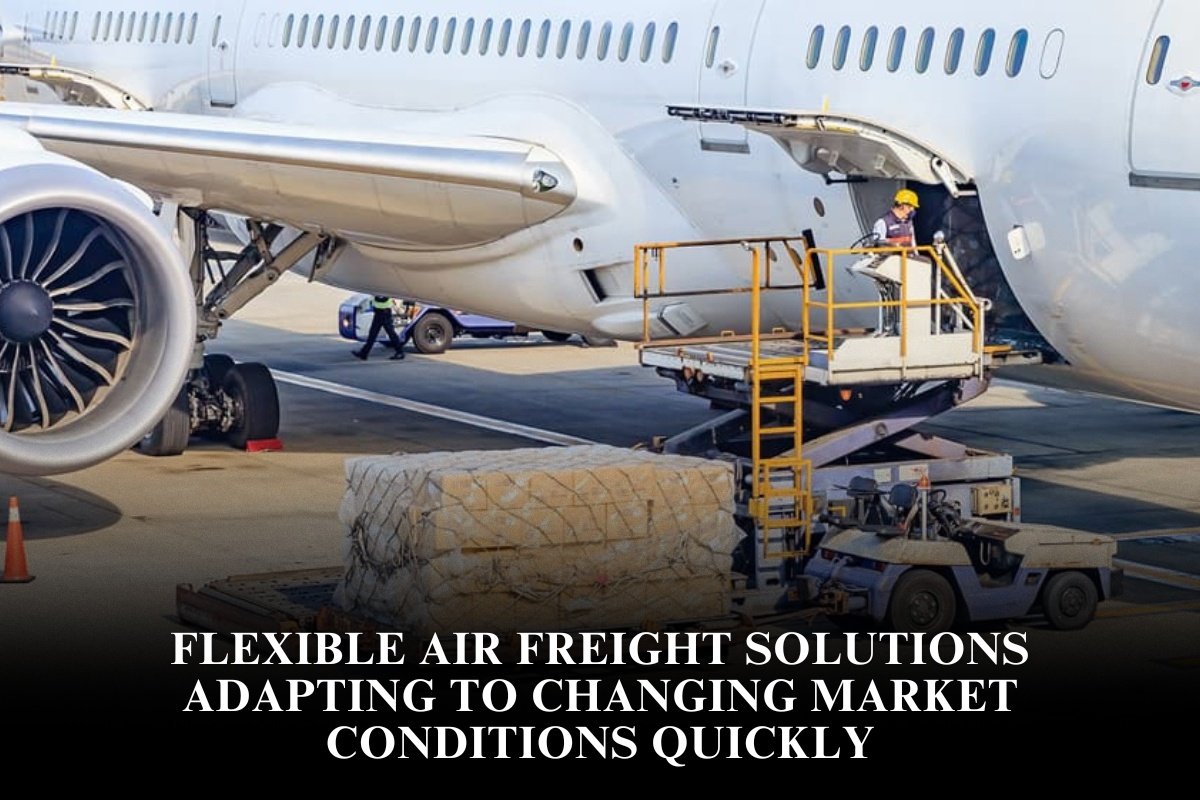
Global markets are more volatile than ever. Shifting consumer demand, geopolitical uncertainty, supply chain disruptions, and evolving trade regulations are now part of the everyday business environment. In this climate, speed alone is no longer enough.
Companies need logistics partners that can adapt quickly as conditions change. Flexible air freight solutions have emerged as a critical enabler of agility, allowing businesses to respond to uncertainty with confidence rather than disruption. Flexibility in air freight is no longer a luxury; it is a strategic necessity.
Understanding What Flexibility Means in Air Freight
Flexibility in air freight refers to the ability of service providers to adjust routes, capacity, schedules, and service models in response to changing circumstances. This includes scaling volume up or down, rerouting shipments, offering alternative service levels, and responding quickly to unexpected disruptions.
Rather than operating with rigid, fixed structures, flexible air freight providers design their operations to adapt. This adaptability allows them to support customers whose needs evolve rapidly, whether due to market fluctuations, seasonal demand, or external crises.
Responding Quickly to Demand Fluctuations
Market demand rarely remains stable. Product launches, promotional campaigns, economic shifts, and sudden changes in consumer behavior can all cause unexpected spikes or drops in shipping volumes.
Flexible air freight solutions allow businesses to adjust capacity quickly. Providers that can secure additional space during peak periods or reduce commitments during slower cycles help organizations avoid both shortages and unnecessary costs. This responsiveness supports more efficient inventory management and reduces the risk of missed opportunities.
Adapting Routes and Networks During Disruptions
Disruptions are now a regular feature of global trade. Weather events, political instability, airport congestion, labor issues, and regulatory changes can all impact standard shipping routes.
Flexible air freight providers maintain adaptable routing strategies. They can redirect cargo through alternative hubs, leverage different carrier networks, and adjust transit plans in real time. This adaptability helps maintain continuity when standard routes are no longer viable and reduces the operational impact on customers.
Offering Multiple Service Levels for Different Needs
Not every shipment requires the same level of urgency. Some goods are critical and time-sensitive, while others can tolerate longer transit times.
Flexible air freight solutions offer tiered service options, allowing businesses to choose between express, standard, deferred, or consolidated services depending on their priorities. This flexibility supports cost control while still providing access to speed when it truly matters. Organizations can adjust their shipping strategies dynamically rather than relying on a single fixed approach.
Supporting Agile Inventory and Production Strategies
Modern businesses increasingly rely on agile inventory models such as just-in-time production and demand-driven replenishment. These strategies depend on logistics systems that can respond quickly to change.
Flexible air freight supports these models by enabling faster replenishment, rapid response to shortages, and quicker adjustments to production schedules. When businesses know they can rely on adaptable logistics support, they can operate with greater confidence and less reliance on large safety stock.
Leveraging Technology to Enable Real-Time Adaptation
Technology plays a central role in enabling flexibility. Real-time tracking, predictive analytics, digital booking platforms, and integrated communication systems allow air freight providers to adjust operations quickly.
These tools provide early visibility into potential disruptions, capacity constraints, or delays. With this insight, providers can make proactive decisions rather than reactive ones. Technology-driven flexibility allows both providers and customers to collaborate more effectively in dynamic environments.
Helping Businesses Navigate Seasonal and Cyclical Changes
Many industries experience strong seasonality. Retail peaks during holidays, agriculture follows harvest cycles, and fashion aligns with seasonal collections.
Flexible air freight solutions allow businesses to scale operations in line with these cycles. Providers that understand seasonal patterns and plan capacity accordingly can support smoother transitions between high and low demand periods. This adaptability helps businesses avoid bottlenecks during peaks and inefficiencies during slower periods.
Enabling Faster Market Entry and Expansion
Businesses expanding into new markets often face uncertainty around demand levels, regulatory requirements, and infrastructure reliability. Committing to rigid logistics structures too early can increase risk.
Flexible air freight allows companies to test new markets with smaller volumes, adjust quickly based on performance, and scale operations as demand grows. This reduces the barriers to expansion and supports more strategic, data-driven growth decisions.
Strengthening Resilience During Economic Uncertainty
Economic conditions can change rapidly due to inflation, currency fluctuations, trade tensions, or global crises. Businesses that depend on rigid logistics arrangements often struggle to adjust.
Flexible air freight solutions provide a buffer against uncertainty. The ability to modify shipping strategies, adjust volume commitments, and shift service levels allows organizations to stay operationally resilient even when broader economic conditions become unstable.
Enhancing Customer Experience Through Adaptability
Customers increasingly expect fast, reliable, and responsive service. When delivery timelines shift due to external factors, the ability to adapt becomes critical to maintaining trust.
Flexible air freight providers can adjust delivery plans, communicate proactively, and offer alternative solutions when challenges arise. This responsiveness improves the customer experience and protects long-term relationships. Flexibility becomes not just an operational benefit but a service differentiator.
Building Long-Term Partnerships Through Shared Agility
Flexibility works best when it is embedded in long-term partnerships rather than treated as a transactional feature. Providers who collaborate closely with customers to understand their evolving needs can design more adaptive solutions.
These partnerships support shared planning, transparent communication, and coordinated response to change. Over time, both parties become more agile together, strengthening overall supply chain performance.
Flexibility as a Competitive Advantage in Modern Logistics
In increasingly competitive markets, the ability to adapt quickly is a powerful advantage. Companies that rely on rigid logistics structures often struggle to keep pace with changing conditions.
Flexible air freight solutions empower businesses to move faster, respond smarter, and operate with greater confidence. As global markets continue to evolve unpredictably, flexibility is becoming one of the most valuable capabilities in air freight services.
Frequently Asked Questions
What makes an air freight solution truly flexible?
A flexible solution allows for quick adjustments in capacity, routing, service levels, and scheduling in response to changing customer needs or external conditions.
Why is flexibility important in today’s supply chains?
Because demand fluctuations, disruptions, and uncertainty are now common. Flexibility helps businesses maintain continuity and adapt without major operational setbacks.
Does flexibility increase the cost of air freight services?
Not necessarily. While premium options may cost more, flexibility can reduce hidden costs related to delays, missed opportunities, and inefficiencies.
How does technology support flexible air freight operations?
Through real-time data, predictive analytics, digital booking tools, and visibility platforms that allow providers to adjust operations quickly and proactively.
Can small businesses benefit from flexible air freight solutions?
Yes. Flexibility allows smaller businesses to scale gradually, manage risk, and respond to market changes without overcommitting resources.
How can companies evaluate whether a provider offers real flexibility?
By reviewing their track record in handling disruptions, their range of service options, their communication practices, and their willingness to tailor solutions to changing needs.