Air freight stands out as a vital solution for businesses grappling with unpredictable global supply chains, offering speed and adaptability where sea or road transport falls short. In an era of disruptions like geopolitical tensions, port congestion, and urgent demands for high-value or perishable goods, flexible air freight options enable companies to reroute shipments, consolidate loads, and meet tight deadlines without compromising reliability.
These solutions address core challenges such as capacity constraints, regulatory hurdles, and cost pressures, turning potential setbacks into competitive advantages.
Key Challenges in International Logistics
International logistics often face multifaceted obstacles that rigid shipping methods cannot handle effectively. Geopolitical events, like the Red Sea crisis, disrupt traditional routes and inflate costs, while customs regulations vary widely across borders, causing delays and compliance issues. Capacity limitations on aircraft, especially for bulky or heavy cargo during peak seasons, compound problems, alongside weather disruptions and high security requirements for sensitive items.
Perishable goods, pharmaceuticals, and high-value electronics demand temperature control and minimal transit times to avoid spoilage or value loss, yet traditional freight struggles with these needs. Supply chain volatility from trade barriers or sudden demand spikes further strains operations, risking stockouts or excess inventory.
What Makes Air Freight Flexible
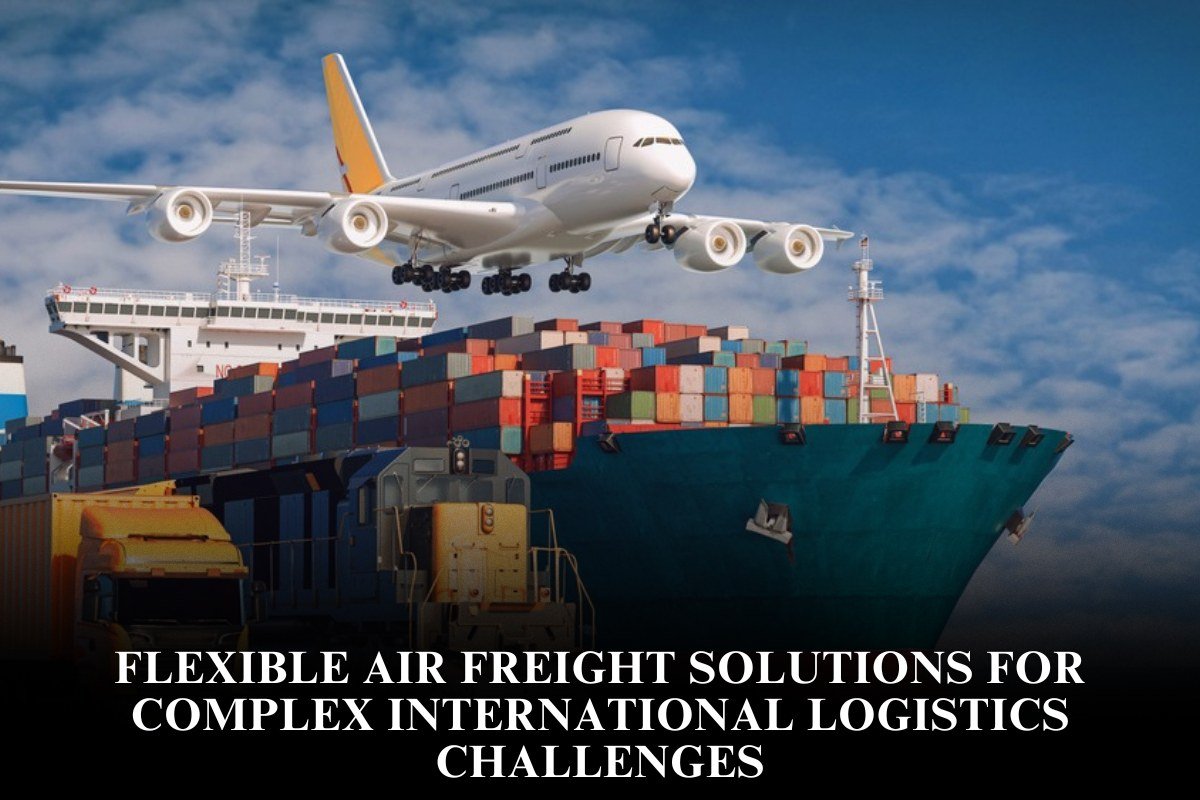
Flexible air freight adapts to these challenges through options like expedited, deferred, or hybrid services, allowing shippers to balance speed and cost. Providers offer multimodal integration—combining air with road or sea for end-to-end efficiency—plus consolidations that group smaller shipments to optimize space and reduce per-unit costs. Real-time tracking, next-flight-out (NFO) bookings, and rerouting capabilities provide agility, enabling responses to last-minute changes or emergencies.
Charter flights and hand-carry services handle oversized or urgent loads, while value-added features like origin consolidation and deconsolidation minimize handling risks. Global networks spanning 80+ countries ensure reliable capacity via trusted airline partnerships, even in tight markets.
Benefits for Complex Supply Chains
Air freight slashes transit times to 1-7 days, ideal for time-sensitive industries like healthcare, e-commerce, and manufacturing, reducing warehouse needs and enabling just-in-time inventory. It enhances security for high-value goods with stringent airport protocols and fewer handling points, lowering theft or damage risks.
During disruptions, air freight bypasses port delays, offering predictability with fixed schedules and easy rerouting. Cost savings emerge from strategies like deferred air, which saved a semiconductor firm over $1.5 million annually by shifting non-urgent loads. Overall, it boosts resilience, cash flow, and market access across continents.
Real-World Case Studies
Practical examples illustrate air freight’s impact. JAS Worldwide managed a pharmaceutical rollout from China to the UK, transporting 500+ pallets and 700+ cubic meters flawlessly by repacking for aircraft compatibility and optimizing capacity. Cargo Express handled 18 lithium-ion batteries (13.25 tonnes) from Los Angeles to Vienna via cross-trade air freight, navigating time zones and documentation for on-time delivery despite multi-leg routing.
In flexible packaging, Baxter Freight streamlined ePac’s EU imports/exports with co-loaded vans, customs support, and SLAs, cutting lead times and per-pallet costs while scaling operations. A global firm using DHL air forwarding improved inventory accuracy and reduced lead times through real-time tracking and route optimization.
Strategies to Maximize Flexibility and Savings
Leverage consolidations and deferred services to cut costs without sacrificing speed, especially for less urgent cargo. Partner with forwarders offering tech like AI route optimization and predictive analytics for proactive disruption management. Opt for temperature-controlled solutions (CEIV Pharma/Fresh certified) for perishables, with real-time monitoring to ensure compliance.
Build contingency plans, including multimodal shifts and carbon offset programs, to address environmental concerns and regulatory shifts. Negotiate RFPs with volume commitments for better rates, and use single points of contact for seamless door-to-door service.
Frequently Asked Questions (FAQ)
1. What distinguishes flexible air freight from standard options?
Flexible air freight includes customizable services like deferred timing, consolidations, charters, and rerouting, adapting to budgets and urgency unlike fixed schedules in standard air or sea freight.
2. Which industries benefit most from these solutions?
Pharma, healthcare, e-commerce, aerospace, perishables, and high-value goods like electronics thrive due to speed, security, and temperature control needs.
3. How does air freight handle supply chain disruptions?
It provides rapid rerouting, fixed schedules, and global networks to bypass issues like port congestion or geopolitical events, ensuring reliability.
4. Can air freight reduce overall logistics costs?
Yes, through consolidations, deferred services, and reduced inventory holding—e.g., one firm saved $1.5M yearly by shifting 5% of shipments.
5. What are common challenges and mitigation steps?
High costs and capacity limits are addressed via optimization tools, compliance software, and hybrid modes; weather via contingencies.