In today’s highly competitive global economy, speed is often the difference between market leadership and missed opportunity. Global air cargo has become a critical enabler of rapid international business expansion, allowing companies to reach new markets, serve customers faster, and operate across borders with greater agility.
By dramatically reducing transit times and increasing supply chain reliability, air cargo supports growth strategies that would be impossible with slower transport modes alone.
Speed as a Strategic Advantage in Global Markets
Time-to-market is one of the most decisive factors in international expansion. Air cargo enables businesses to move goods across continents in days rather than weeks.
This speed allows companies to:
- Enter new markets quickly
- Respond rapidly to customer demand
- Launch products simultaneously across regions
- Reduce delays caused by long shipping routes
For many industries, speed is not just convenient—it is strategically essential.
Supporting Just-in-Time and Agile Business Models
Modern businesses increasingly rely on just-in-time and agile supply chains. Global air cargo supports these models by minimizing inventory requirements and reducing the risk of stockouts.
With air freight, businesses can:
- Carry less inventory in foreign markets
- Replenish stock quickly
- Adapt to demand fluctuations
- Reduce warehousing costs
This flexibility lowers the barriers to expanding into new regions.
Enabling Access to Distant and Emerging Markets
Air cargo connects regions that are geographically distant or poorly served by other transport modes. This connectivity is especially important for businesses expanding into emerging markets.
Benefits include:
- Direct access to landlocked or remote regions
- Faster integration into global trade networks
- Reduced dependence on complex multimodal routes
Organizations such as the International Air Transport Association highlight air cargo as a vital driver of global economic connectivity.
Protecting Product Value Through Faster Transit
Many products lose value if delivery is delayed. Air cargo preserves product quality by minimizing transit time and exposure to environmental risks.
This is especially important for:
- High-value goods
- Perishable products
- Time-sensitive components
- Medical and pharmaceutical supplies
Faster delivery protects brand reputation and customer trust in new markets.
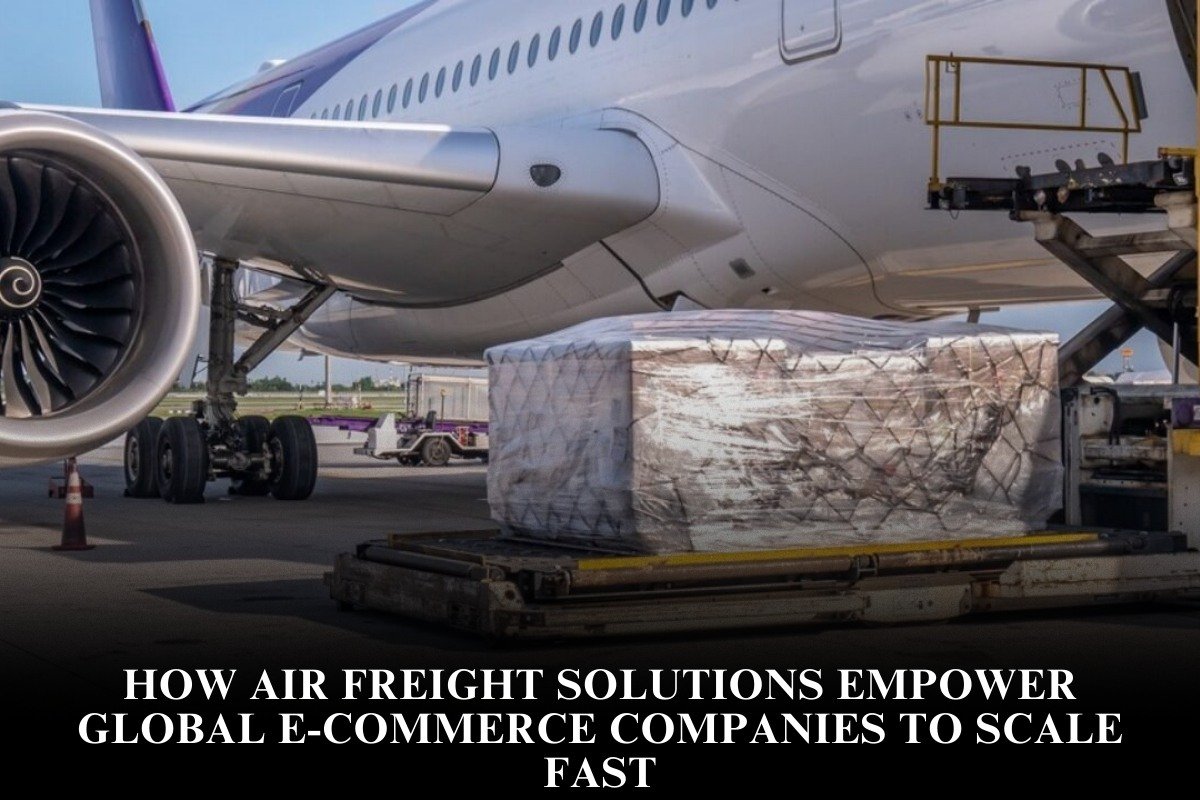
Accelerating Global E-Commerce Expansion
E-commerce growth has transformed international trade expectations. Customers now expect fast, reliable delivery regardless of borders.
Global air cargo enables:
- Cross-border e-commerce fulfillment
- Shorter delivery windows
- Reliable returns and reverse logistics
- Competitive service levels worldwide
For online businesses, air cargo is often the backbone of international scalability.
Reducing Risk in Early Market Entry
When entering new markets, uncertainty is high. Air cargo reduces risk by allowing smaller, more frequent shipments instead of large upfront inventory commitments.
This approach helps businesses:
- Test market demand safely
- Adjust product offerings quickly
- Avoid overstocking
- Exit or pivot markets with minimal loss
Lower risk accelerates decision-making and expansion confidence.
Strengthening Global Supply Chain Resilience
Global disruptions—whether geopolitical, environmental, or logistical—can threaten expansion plans. Air cargo provides an alternative when other supply routes fail.
Its role in resilience includes:
- Bypassing congested ports
- Maintaining supply continuity during crises
- Supporting rapid recovery after disruptions
Resilient supply chains enable sustained international growth.
Supporting High-Value and Knowledge-Based Industries
Industries built on innovation, technology, and precision rely heavily on air cargo to scale internationally.
Air cargo supports:
- Technology hardware distribution
- Automotive and aerospace components
- Specialized manufacturing inputs
- Research and development supply chains
These industries often cannot afford delays associated with slower transport.
Enhancing Global Customer Experience
Fast, predictable delivery improves customer satisfaction in international markets. Air cargo helps businesses meet service-level expectations that build loyalty.
Improved customer experience includes:
- Shorter lead times
- Greater delivery reliability
- Faster problem resolution
Strong early customer relationships are crucial when expanding globally.
Facilitating Global Production Networks
Many businesses operate distributed production networks, with components sourced from multiple countries. Air cargo enables seamless coordination between these locations.
This allows companies to:
- Optimize global production
- Reduce downtime between stages
- Scale operations internationally
Efficient logistics underpin successful global integration.
Enabling Rapid Response to Market Opportunities
Global markets evolve quickly. Air cargo allows businesses to capitalize on sudden opportunities such as seasonal demand, promotional windows, or urgent contracts.
The ability to act fast:
- Creates competitive differentiation
- Strengthens market positioning
- Supports dynamic growth strategies
Speed becomes a growth multiplier.
A Catalyst for International Business Growth
Global air cargo is more than a transportation method—it is a strategic growth tool. By reducing distance, time, and risk, it empowers businesses to expand internationally with confidence and speed.
As global competition intensifies and customer expectations rise, air cargo will continue to play a central role in enabling faster, smarter, and more resilient international business expansion.
Frequently Asked Questions (FAQ)
Q. Why is air cargo important for international expansion?
It drastically reduces delivery times, enabling faster market entry and responsiveness.
Q. Is air cargo only for high-value goods?
While ideal for high-value and time-sensitive products, it also supports agile supply chains across many industries.
Q. How does air cargo reduce expansion risk?
It allows smaller, frequent shipments, reducing upfront inventory commitments in new markets.
Q. Does air cargo support e-commerce growth?
Yes. It is essential for meeting fast cross-border delivery expectations.
Q. Is air cargo resilient during global disruptions?
Yes. It often provides alternative routes when sea or land transport is disrupted.