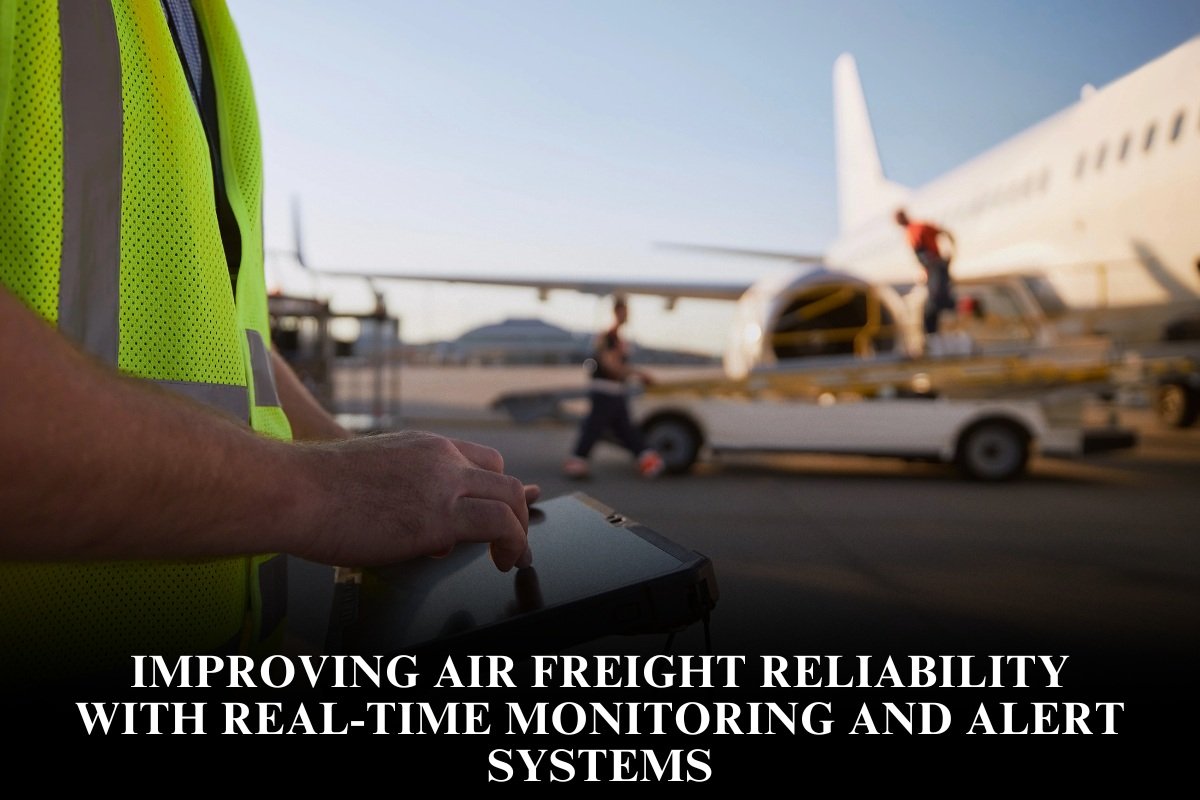
Air freight plays a critical role in global supply chains, especially for high-value, time-sensitive, and perishable goods. However, the speed of air transport also amplifies risk—delays, temperature excursions, mishandling, and lack of visibility can quickly lead to financial loss and customer dissatisfaction.
Improving air freight reliability increasingly depends on real-time monitoring and alert systems that provide continuous visibility, proactive risk management, and data-driven decision-making throughout the shipment lifecycle.
The Reliability Challenge in Air Freight
Air freight operations involve multiple handoffs between shippers, ground handlers, airports, airlines, customs authorities, and last-mile carriers. Each transfer introduces potential points of failure. Traditional tracking methods often rely on milestone updates, such as departure and arrival scans, which leave long gaps in visibility.
Without real-time insight, issues like delays, route deviations, excessive vibration, or temperature fluctuations may go unnoticed until the cargo arrives—often too late to prevent damage or missed delivery commitments. This lack of transparency undermines reliability and limits the ability to respond effectively when disruptions occur.
What Real-Time Monitoring Systems Deliver
Real-time monitoring systems use connected sensors, GPS tracking, and wireless communication to provide continuous data on shipment location and condition. These systems track variables such as temperature, humidity, shock, light exposure, and dwell time, offering a live view of cargo status from origin to destination.
Instead of relying on assumptions, logistics teams gain factual, time-stamped information that reflects actual conditions during transit. This visibility transforms air freight from a reactive process into a controlled, predictable operation.
Proactive Intervention Through Intelligent Alerts
The true power of real-time monitoring lies in alert systems. When predefined thresholds are breached—such as temperature rising outside an acceptable range or a shipment deviating from its planned route—alerts are triggered immediately.
These alerts enable rapid intervention. Ground teams can prioritize at-risk cargo, reroute shipments, adjust storage conditions, or escalate issues before damage occurs. For perishable pharmaceuticals, fresh produce, or sensitive electronics, minutes matter. Early warnings protect cargo integrity and significantly reduce claims and losses.
Enhancing Cold Chain Integrity
Cold chain air freight is especially vulnerable to reliability failures. Temperature excursions during loading, tarmac exposure, or customs delays can compromise product quality. Real-time monitoring ensures continuous verification of cold chain compliance, even during handoffs.
By identifying where and when temperature deviations occur, stakeholders can pinpoint process weaknesses and implement corrective actions. Over time, this data strengthens cold chain design, improves handling protocols, and builds confidence among shippers and regulators.
Data-Driven Performance and Accountability
Beyond individual shipments, real-time monitoring generates valuable historical data. Patterns in delays, handling issues, or environmental exposure can be analyzed to improve network performance. Airlines, airports, and ground handlers become more accountable when performance data is transparent and measurable.
This data-driven approach supports continuous improvement, better carrier selection, optimized routing, and more accurate service-level agreements. Reliability improves not only through faster responses, but through smarter planning informed by real-world evidence.
Strengthening Customer Trust and Compliance
Shippers increasingly expect proof of delivery conditions, not just delivery times. Real-time monitoring provides documented evidence that goods were transported within required parameters. This is particularly important for regulated industries such as pharmaceuticals, aerospace, and food logistics.
Transparent visibility builds customer trust, reduces disputes, and supports regulatory compliance. When customers can access live or post-shipment data, confidence in air freight reliability increases significantly.
Integration With Digital Supply Chain Ecosystems
Modern monitoring and alert systems integrate with transportation management systems, control towers, and predictive analytics platforms. This integration allows alerts to trigger automated workflows, such as escalation protocols or exception management processes.
As artificial intelligence and predictive modeling evolve, real-time data will increasingly be used to anticipate disruptions before they occur, further strengthening reliability across air freight networks.
A Smarter Path to Reliable Air Freight
Improving air freight reliability is no longer about moving faster alone—it is about moving smarter. Real-time monitoring and alert systems provide the visibility, responsiveness, and intelligence needed to manage complexity and uncertainty in global air logistics.
By enabling proactive intervention, protecting cargo integrity, and driving continuous improvement, these technologies transform air freight into a more reliable, transparent, and resilient mode of transport. In an increasingly demanding supply chain environment, real-time insight is no longer optional—it is essential.
FAQs
What is real-time monitoring in air freight?
It involves using connected tracking devices and sensors to continuously monitor shipment location and condition throughout air transport.
How do alert systems improve air freight reliability?
They notify stakeholders immediately when problems occur, allowing rapid intervention before delays or damage escalate.
Is real-time monitoring only for high-value cargo?
While especially valuable for sensitive or high-value goods, it also improves reliability and efficiency for general air freight.
Can these systems help reduce cargo claims?
Yes. Early detection of issues and documented shipment conditions significantly reduce damage, loss, and disputes.
How does real-time monitoring support compliance?
It provides verifiable data showing that shipments met regulatory and contractual requirements during transit.