Global trade is experiencing unprecedented complexity. Geopolitical tensions, shifting trade regulations, supply chain disruptions, labor shortages, and unpredictable demand patterns have made international commerce more challenging than ever.
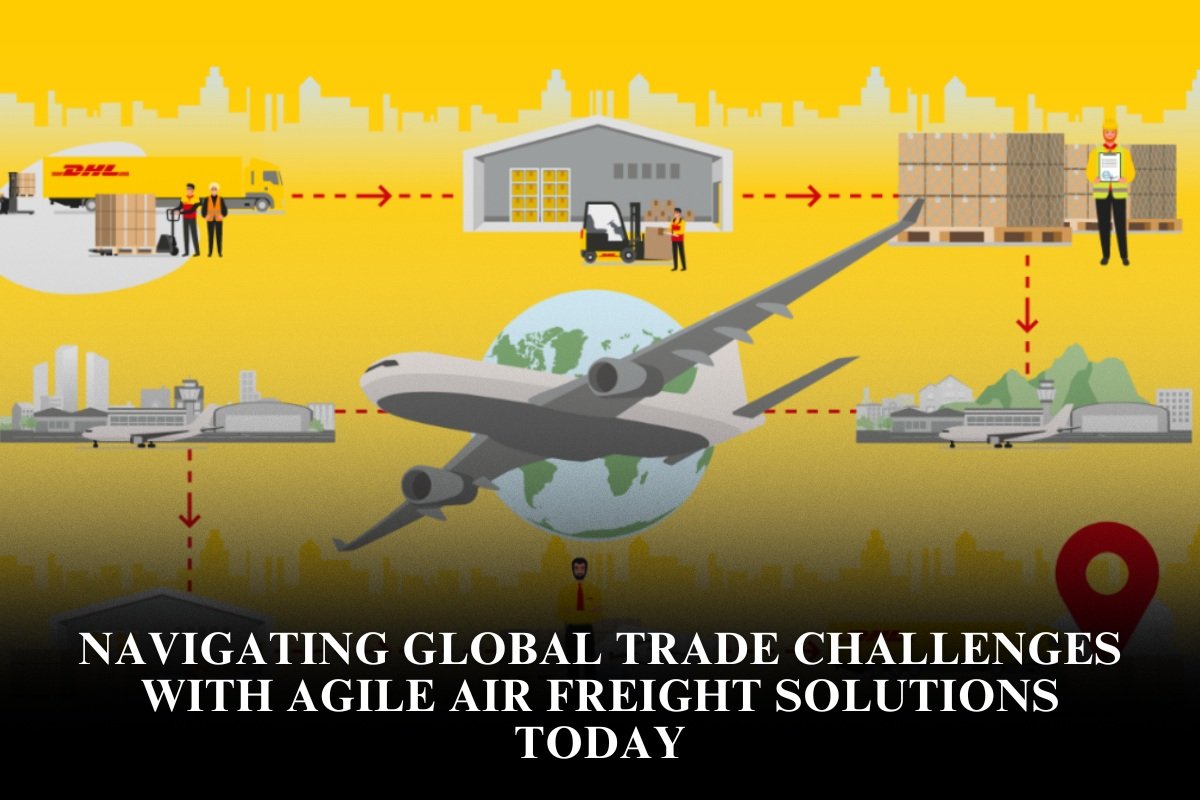
In this environment, businesses must move beyond rigid logistics models and adopt flexible strategies that can respond quickly to change. Agile air freight solutions have emerged as a critical tool for navigating today’s global trade challenges while maintaining speed, reliability, and resilience.
The Changing Landscape of Global Trade
Global trade no longer operates in stable, predictable cycles. Sudden tariff changes, port congestion, extreme weather events, and regional conflicts can disrupt supply chains overnight. At the same time, customer expectations for fast delivery and product availability continue to rise.
Traditional freight models that rely heavily on long lead times and fixed routes struggle to keep up. Businesses need transportation solutions that can adapt in real time, reroute shipments, and maintain continuity despite ongoing uncertainty.
Why Agility Matters in Air Freight
Agility in air freight refers to the ability to adjust capacity, routes, schedules, and service levels quickly in response to changing conditions. Unlike slower transport modes, air freight offers inherent speed, but modern agility goes far beyond fast transit.
Agile air freight solutions allow businesses to respond to disruptions without halting operations. Whether it is shifting production locations, avoiding congested trade lanes, or meeting sudden spikes in demand, agility ensures supply chains remain functional under pressure.
Responding to Disruptions and Uncertainty
One of the greatest advantages of agile air freight is its role in disruption management. When ocean ports are congested or land borders face delays, air freight provides an alternative that minimizes downtime.
Flexible routing and on-demand capacity enable companies to bypass bottlenecks and maintain delivery commitments. In times of crisis—such as natural disasters or geopolitical instability—air freight often becomes the most reliable option for keeping goods moving across borders.
Supporting Compliance and Regulatory Changes
Global trade is governed by complex and frequently changing regulations. Agile air freight providers integrate digital documentation, automated compliance checks, and customs pre-clearance processes to reduce delays caused by regulatory issues.
Real-time data sharing allows businesses to adapt quickly to new trade rules, sanctions, or documentation requirements. This responsiveness reduces the risk of shipment holds, penalties, and missed delivery windows.
Enhancing Supply Chain Visibility and Control
Visibility is essential when navigating global trade challenges. Agile air freight solutions offer real-time tracking and data integration that provide end-to-end insight into shipment status.
This visibility allows supply chain teams to anticipate issues, communicate proactively with customers, and make informed decisions quickly. Greater control over shipments reduces uncertainty and supports more confident trade operations in volatile markets.
Balancing Speed With Cost Efficiency
While air freight is traditionally viewed as a premium option, agile solutions focus on smarter use rather than constant use. Businesses can selectively deploy air freight for critical shipments, high-value goods, or urgent replenishment while using other modes for less time-sensitive cargo.
This targeted approach balances speed with cost control. Agile planning ensures air freight supports strategic objectives rather than becoming a reactive expense.
Enabling Resilient and Flexible Business Models
Agile air freight supports modern business models that rely on responsiveness rather than excess inventory. Just-in-time manufacturing, rapid product launches, and global e-commerce fulfillment all benefit from the flexibility air freight provides.
By shortening lead times and enabling fast market response, businesses can reduce inventory risk and adapt quickly to demand changes across regions.
The Role of Partnerships and Technology
Agility in air freight is strengthened through collaboration and technology. Strong partnerships with carriers, logistics providers, and customs authorities enable faster decision-making and coordinated responses.
Advanced analytics, automation, and digital platforms further enhance agility by enabling scenario planning, route optimization, and rapid execution. Together, these elements transform air freight from a backup option into a strategic asset.
FAQs
What makes air freight solutions agile?
Agile air freight solutions offer flexible routing, on-demand capacity, real-time visibility, and rapid response to disruptions.
Why is air freight important during global trade disruptions?
It provides a fast, reliable alternative when other transport modes face delays or shutdowns.
Can agile air freight help manage regulatory changes?
Yes, digital documentation and compliance tools help adapt quickly to changing trade regulations.
Is air freight always the most expensive option?
Not necessarily. When used strategically for critical shipments, it can reduce overall supply chain risk and cost.
How does air freight improve supply chain resilience?
By reducing lead times, improving visibility, and offering flexible alternatives during disruptions.