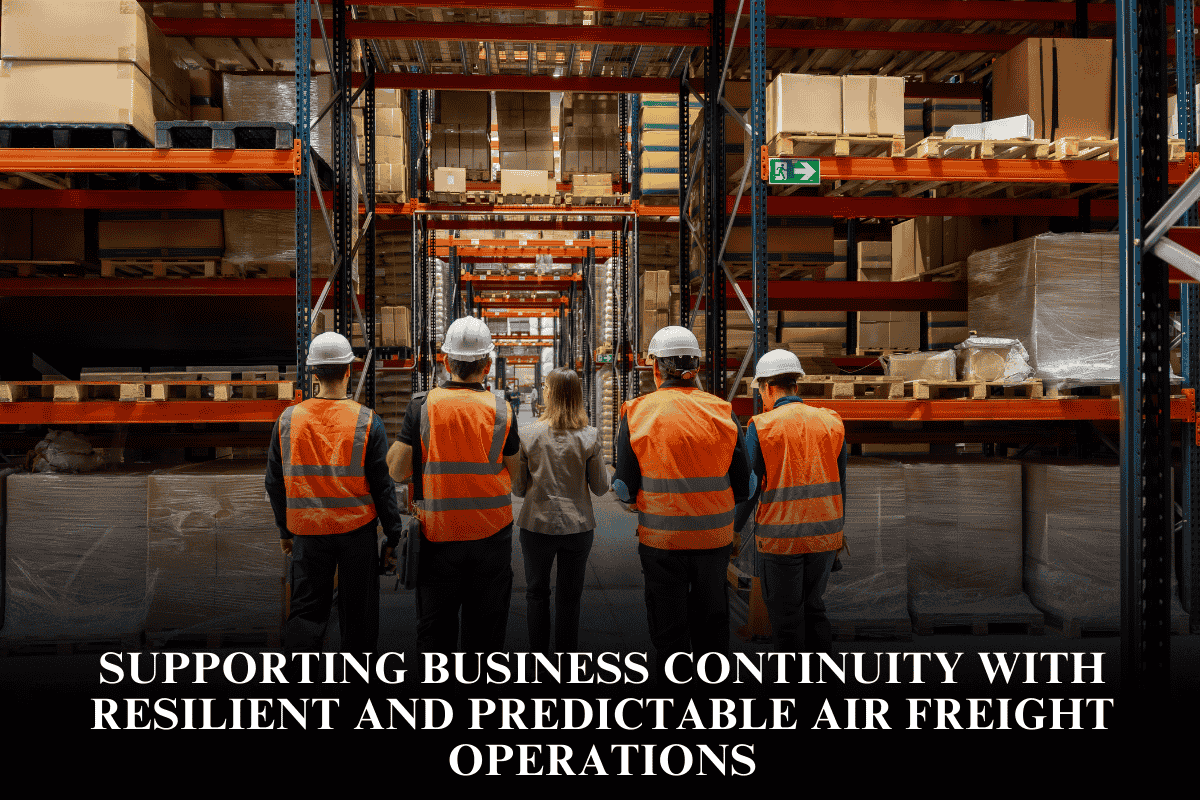
Resilient air freight operations form the backbone of business continuity, ensuring supply chains endure disruptions like weather events, geopolitical tensions, or pandemics. By prioritizing predictability through diversified routes, real-time tracking, and robust contingency plans, companies minimize downtime and maintain customer trust.
These strategies prove vital for U.S. logistics firms handling perishables, electronics, or pharmaceuticals amid 2026’s volatile global trade.
Risk Assessment Foundations
Start with comprehensive risk mapping: identify threats like airport closures, fuel shortages, or cyber incidents via business impact analysis. Quantify effects—e.g., a 24-hour delay costs $50K in spoiled goods—and prioritize high-impact vulnerabilities.
Aerospace-grade tools forecast disruptions using AI analytics, enabling proactive rerouting before storms hit key hubs like Atlanta or Memphis.
Diversified Routing and Capacity
Avoid single-point failures by blending major carriers (FedEx, UPS) with regionals and charters; maintain 20-30% excess capacity via pre-negotiated contracts. Multi-modal backups—air to truck/rail—ensure seamless handoffs; for instance, COVID-era playbook shifted 15% cargo to secondary airports like Ontario over LAX. Dynamic slot allocation via platforms like CargoAI predicts availability, locking rates 48 hours ahead.
Technology for Predictability
Real-time visibility via IoT trackers (e.g., Bluetooth tags on pallets) and blockchain manifests cuts blind spots by 40%; GE Aerospace’s algorithms optimize loads mid-flight. Cloud-based ERPs integrate weather APIs, automating alerts for ETAs within 15 minutes accuracy. Redundant data centers mirror operations across coasts, supporting failover in under 60 seconds during outages.
Contingency Planning Layers
Develop tiered responses: Level 1 (minor delays) uses buffer inventory; Level 3 (hub shutdowns) activates charters with 4-hour notice. Cross-train staff for multi-roles and conduct quarterly simulations—e.g., mock port strikes rerouting Asia-U.S. lanes. Partner ecosystems amplify resilience: share BCPs with forwarders, aligning SLAs for 99% on-time delivery.
Regulatory and Cybersecurity Safeguards
Comply with TSA cargo screening and FAA slot rules; post-2025 updates mandate cyber drills quarterly. Encrypt shipments end-to-end, segment networks to isolate breaches, and audit vendors—aviation saw 30% fewer incidents via zero-trust models. Insurance tailors coverage for “air-only” perils, capping deductibles at 1% shipment value.
Performance Metrics Table
Implementation Roadmap
- Audit current ops (Month 1). 2. Build BCP with stakeholders (Month 2). 3. Integrate tech stack (Month 3). 4. Train/test/refine yearly. Costs average $0.05/kg uplift but yield 5x ROI via avoided losses.
Case Study: Pandemic Pivot
Southwest’s 2022 software glitch canceled 16K flights; forward-thinkers like DHL pre-stocked e-commerce hubs, hitting 98% continuity via air-rail hybrids—lessons now standard for U.S. e-tailers.
FAQs
Q. Why prioritize air freight resilience?
Speeds recovery, cuts losses 50-70% vs. ocean delays.
Q. Best tech for tracking?
IoT + AI platforms for 15-min ETA precision.
Q. How often test BCPs?
Quarterly simulations with partners.
Q. Multi-modal backups viable?
Yes, air-truck hybrids ensure 95% OTD.
Q. Cyber risks top concern?
Yes, with quarterly audits halving breach odds.