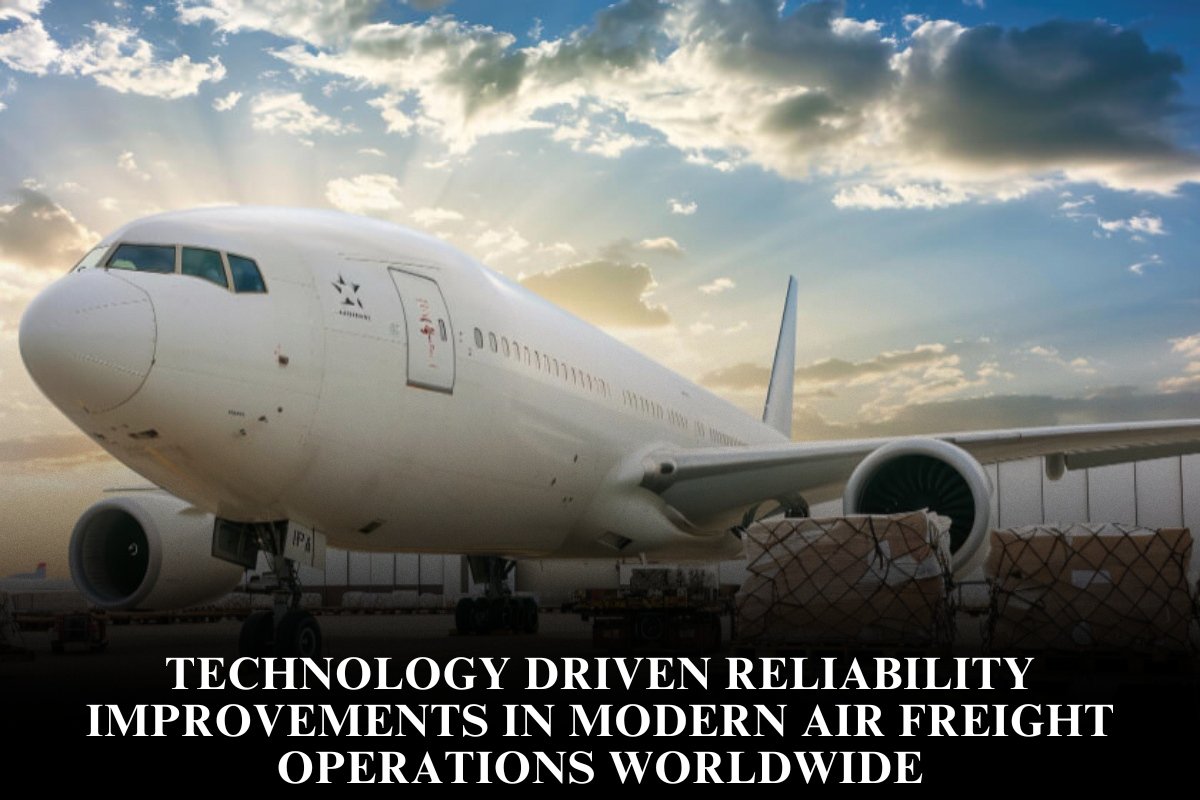
Global air freight has become one of the most critical enablers of modern commerce, moving high-value and time-sensitive goods across continents every day. As demand for speed, transparency, and consistency continues to rise, reliability has become just as important as capacity.
Today, technology is the driving force behind major improvements in how air freight operations perform. From real-time visibility to predictive analytics and automation, digital innovation is reshaping the industry and setting new standards for dependable global logistics.
The Growing Importance of Reliability in Air Freight
Air freight is often used for urgent, sensitive, or high-value shipments. Delays, lost cargo, or miscommunication can have serious consequences for businesses relying on tight timelines.
Reliability is no longer defined simply by whether a shipment arrives eventually, but by whether it arrives on time, with accurate tracking, proper handling, and clear communication throughout the journey. Technology has become essential to meeting these expectations consistently.
Real-Time Tracking and End-to-End Visibility
One of the most significant reliability improvements in air freight comes from advanced tracking technologies. GPS systems, IoT sensors, and connected logistics platforms now provide continuous visibility across the entire shipment lifecycle.
Shippers and logistics teams can monitor location, transit status, and estimated arrival times in real time. This transparency reduces uncertainty and allows proactive intervention when issues arise. Instead of reacting to delays after the fact, operators can identify risks early and take corrective action before reliability is compromised.
Predictive Analytics for Smarter Decision-Making
Modern air freight operations increasingly rely on data analytics to anticipate problems rather than simply respond to them.
Predictive tools analyze historical data, weather patterns, capacity trends, and operational performance to forecast potential disruptions. This allows airlines, freight forwarders, and ground handlers to adjust schedules, allocate resources more effectively, and reduce the likelihood of missed connections or delays. Reliability improves when decisions are informed by data rather than assumptions.
Automation in Cargo Handling and Ground Operations
Manual processes have long been a source of inefficiency and error in logistics. Automation is now transforming cargo handling at airports and distribution hubs.
Automated sorting systems, robotic handling equipment, and digital documentation reduce the risk of human error and improve consistency. Faster, more accurate processing helps ensure that shipments move smoothly through each stage of the journey. These advancements directly support improved reliability, especially during periods of high volume.
Digital Documentation and Paperless Workflows
Traditional air freight operations have relied heavily on paperwork, including bills of lading, customs documents, and compliance forms. Manual paperwork increases the risk of delays, miscommunication, and administrative errors.
Digital documentation platforms streamline this process. Electronic air waybills, digital customs submissions, and integrated compliance systems reduce processing time and minimize mistakes. Faster documentation handling improves clearance speed and reduces the risk of shipments being held due to incomplete or incorrect paperwork.
Enhanced Communication Across the Supply Chain
Reliability depends not only on physical movement but also on communication. Modern air freight platforms now integrate airlines, forwarders, handlers, customs authorities, and customers into connected digital ecosystems.
These platforms allow for faster information sharing, automated alerts, and synchronized updates across stakeholders. When everyone has access to the same accurate, real-time information, coordination improves and misunderstandings decrease. This level of connectivity significantly strengthens overall operational reliability.
Temperature Monitoring and Condition-Control Technologies
For industries such as pharmaceuticals, healthcare, and perishables, reliability includes maintaining strict environmental conditions throughout transit.
Advanced sensors now monitor temperature, humidity, and handling conditions in real time. If deviations occur, alerts are triggered immediately, allowing operators to intervene before cargo is compromised. This technology not only protects product integrity but also builds trust for industries that depend on consistent handling standards.
Artificial Intelligence in Capacity and Route Optimization
Artificial intelligence is increasingly being used to optimize flight schedules, cargo loading, and route planning. These systems can evaluate massive datasets to identify the most efficient and reliable configurations.
AI-driven optimization helps reduce bottlenecks, improve on-time performance, and ensure better use of available capacity. Over time, this contributes to more predictable operations and stronger reliability across complex global networks.
Cybersecurity as a Foundation of Operational Reliability
As air freight becomes more digitally connected, cybersecurity has become an essential component of reliability. A system outage or data breach can disrupt operations just as severely as physical infrastructure failures.
Modern air freight operators are investing in stronger cybersecurity systems to protect data integrity, operational continuity, and communication platforms. Secure digital environments ensure that technological reliability is not undermined by digital vulnerabilities.
The Role of Integrated Platforms in Improving Performance
Instead of using disconnected systems for booking, tracking, documentation, and communication, many air freight operations are now adopting integrated digital platforms.
These systems bring multiple functions into a single ecosystem, reducing fragmentation and improving consistency. When data flows smoothly across departments and partners, errors decrease and operational performance becomes more predictable. Integration is proving to be one of the most powerful enablers of long-term reliability.
Building Trust Through Technology-Enabled Transparency
Reliability is ultimately about trust. Customers want confidence that their shipments will be handled professionally and predictably.
Technology-driven transparency helps build this trust. When clients can see where their cargo is, understand what is happening, and receive accurate updates, they feel more confident in the service. Over time, this trust strengthens partnerships and elevates service expectations across the industry.
Frequently Asked Questions
How does technology improve reliability in air freight?
It enables real-time tracking, predictive planning, automated processing, and better communication, all of which reduce errors, delays, and uncertainty.
What is the biggest technological change in modern air freight?
End-to-end digital visibility through tracking platforms and integrated systems has had one of the most significant impacts on reliability.
Does automation replace human roles in air freight operations?
Automation supports human work rather than replacing it. Skilled professionals are still essential for oversight, decision-making, and managing complex situations.
How does predictive analytics improve performance?
It allows operators to anticipate disruptions, adjust plans early, and reduce the likelihood of delays or missed connections.
Is technology adoption only beneficial for large air freight operators?
No. Smaller operators and forwarders can also benefit from digital tools that improve efficiency, visibility, and customer experience.
Will technology continue to shape the future of air freight reliability?
Yes. Continued innovation in data analytics, AI, automation, and connectivity will play a central role in making air freight operations more resilient, transparent, and dependable worldwide.