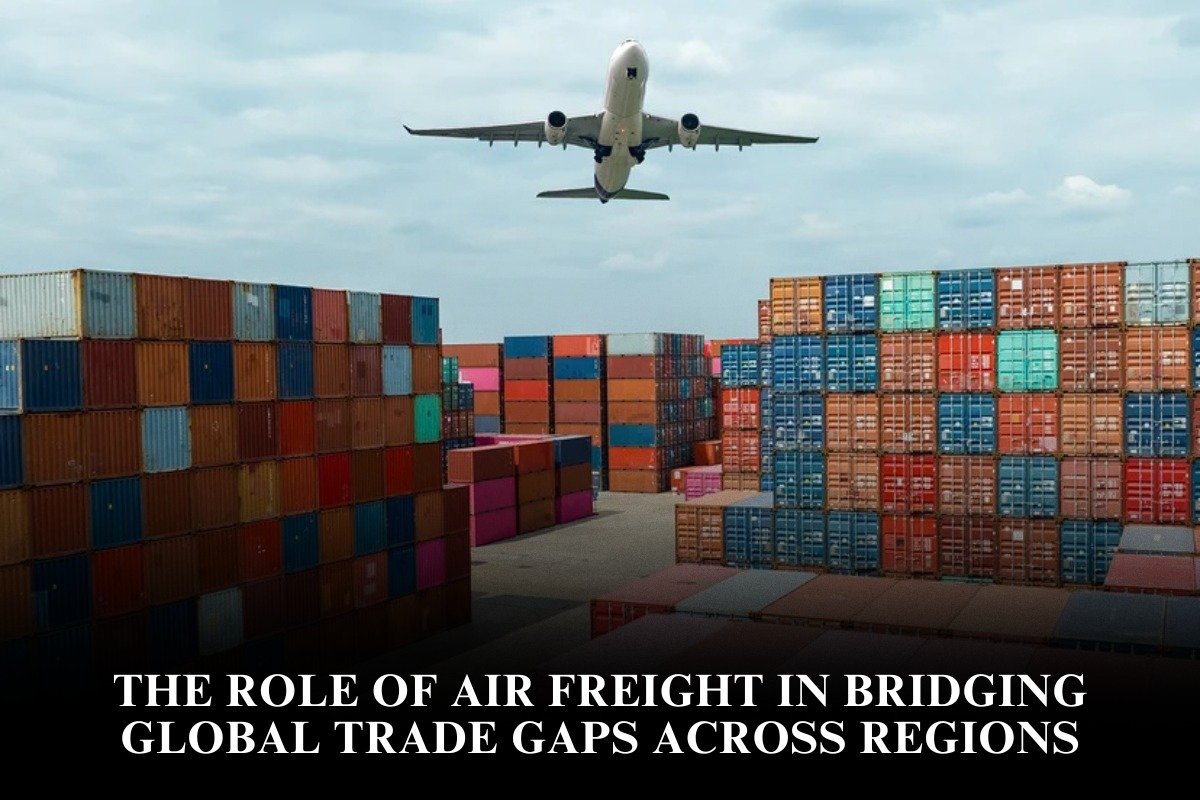
Global trade depends on the smooth movement of goods between regions with different resources, production capacities, and consumer demands. While sea and land transport handle large volumes, air freight plays a unique and critical role in closing trade gaps where speed, reliability, and reach are essential. By connecting distant and underserved regions, air freight enables global commerce to function more evenly and responsively.
Understanding Global Trade Gaps
Trade gaps arise when regions face limitations such as geographic isolation, weak infrastructure, political instability, or long transit times. Developing economies may struggle to access global markets, while remote or landlocked areas often face delays and high logistics costs.
These gaps restrict economic growth, limit market access for producers, and reduce product availability for consumers. Air freight helps overcome many of these barriers by providing fast, direct connections that are less dependent on ground infrastructure.
Speed as a Catalyst for Trade Inclusion
One of air freight’s most powerful contributions is speed. High-value and time-sensitive goods—such as pharmaceuticals, electronics, fresh food, and industrial components—require rapid delivery to remain viable.
By drastically reducing transit times, air freight allows exporters in emerging markets to compete globally. Businesses can reach customers thousands of miles away in days rather than weeks, reducing inventory risk and improving cash flow. This speed transforms distance from a disadvantage into a manageable factor.
Connecting Remote and Landlocked Regions
Many regions lack efficient access to ports or major trade corridors. For these areas, air freight may be the only practical link to international markets. Airports can be established more quickly and with less geographic limitation than seaports or rail networks.
Air freight enables producers in remote regions to export specialized goods, such as agricultural products or handcrafted items, that would otherwise be excluded from global trade. This connectivity supports regional development and reduces dependency on neighboring countries’ infrastructure.
Supporting Just-in-Time and Resilient Supply Chains
Modern supply chains rely on precision and flexibility. Manufacturing hubs often depend on just-in-time delivery of components sourced from multiple regions. Air freight fills critical gaps when delays, disruptions, or sudden demand shifts occur.
During global crises, such as pandemics or natural disasters, air freight has proven essential in maintaining trade flows. Coordinated efforts led by organizations like International Air Transport Association help ensure priority cargo—medical supplies, vaccines, and emergency equipment—reaches regions in need, preventing economic and humanitarian breakdowns.
Enabling Trade in High-Value Goods
Air freight disproportionately supports high-value, low-weight goods that drive significant portions of global trade value. Advanced technology products, precision machinery, and luxury items rely on secure and rapid transport.
This dynamic benefits regions specializing in innovation and advanced manufacturing, allowing them to trade efficiently with distant markets. It also enables consumers worldwide to access products that would be impractical to ship by slower modes.
Balancing Global Trade Inequalities
By improving access to markets, air freight contributes to more balanced global trade. Small and medium-sized enterprises, particularly in developing economies, gain opportunities to export niche products and participate in global value chains.
International trade frameworks supported by institutions such as World Trade Organization recognize logistics efficiency as a key factor in trade competitiveness. Air freight strengthens this efficiency by reducing barriers related to time, reliability, and distance.
Challenges and the Path Forward
Despite its advantages, air freight faces challenges including higher costs, capacity constraints, and environmental concerns. However, ongoing investments in fuel-efficient aircraft, digitalization, and optimized routing are improving sustainability and cost-effectiveness.
As global trade continues to evolve, air freight will remain a strategic tool for bridging gaps—not replacing other transport modes, but complementing them where speed and access matter most.
FAQs
Why is air freight important for global trade?
Air freight enables fast, reliable movement of goods across long distances, making it essential for time-sensitive and high-value trade.
How does air freight help developing regions?
It provides direct access to global markets, allowing exporters in developing or remote regions to compete internationally.
What types of goods rely most on air freight?
Pharmaceuticals, electronics, perishables, emergency supplies, and high-value manufactured goods rely heavily on air transport.
Is air freight replacing sea freight?
No. Air freight complements sea freight by handling urgent and high-value shipments, while sea freight remains dominant for bulk cargo.
What are the main limitations of air freight?
Higher costs and environmental impact are key challenges, though technological advancements are addressing these concerns.